

Headquarters
The Energy and Resources Institute (TERI)
Darbari Seth Block, Core 6C,
India Habitat Centre, Lodhi Road,
New Delhi - 110 003, India
Long before air pollution became a national concern, we built strong expertise in air quality research and management. Our work spans ambient and indoor air quality assessment, source apportionment, emissions inventory, air quality modelling, and impact studies. We actively support the implementation of the National Clean Air Programme (NCAP) through scientific assessments, city action plans, and capacity building initiatives. We work closely with governments, industries, and institutions to deliver science-based solutions for cleaner air and sustainable development. Our research has contributed to policy formulation, standards development, and improved air quality management across India.



On Earth Day 2026, themed “Our Power, Our Planet”, the spotlight is on the role each of us plays in shaping a sustainable future. While air pollution is often seen as a policy or technological challenge, its solutions lie just as much in everyday choices. In India, improving air quality will depend not only on systems and infrastructure, but on empowering citizens to become active participants in the air they breathe.
Every winter, a grey haze settles over many Indian cities. Schools close, hospitals see a rise in respiratory cases, and public debate intensifies over who is responsible for the pollution.
Air pollution continues to be one of the most visible and damaging environmental challenges across Indian cities, particularly in northern and urban regions where poor air quality has become a recurring health emergency.
This article summarizes about India’s winter air pollution, role of meteorology, emission sources and their mitigation, hidden drivers of winter pollution, and requirement of airshed-based approach, preventive action, and sustained emission reductions beyond emergency measures.
This article explores the landscape of clean air finance in India, highlighting key national and international funding sources, funding gaps, challenges, and potential pathways forward.
Air pollution is a complex issue, rooted in everything from urban planning and industrial policy to individual choices and political will.
The Energy and Resources Institute (TERI), in partnership with Artha Global, convened a National Workshop on Clean Air Zones (CAZ) to share technical insights, implementation experiences, and financing pathways for improving urban air quality through corridor-focused interventions. The workshop presented ongoing CAZ pilot work in Vijayawada and Visakhapatnam and discussed how such approaches can support cleaner and more livable urban streets.
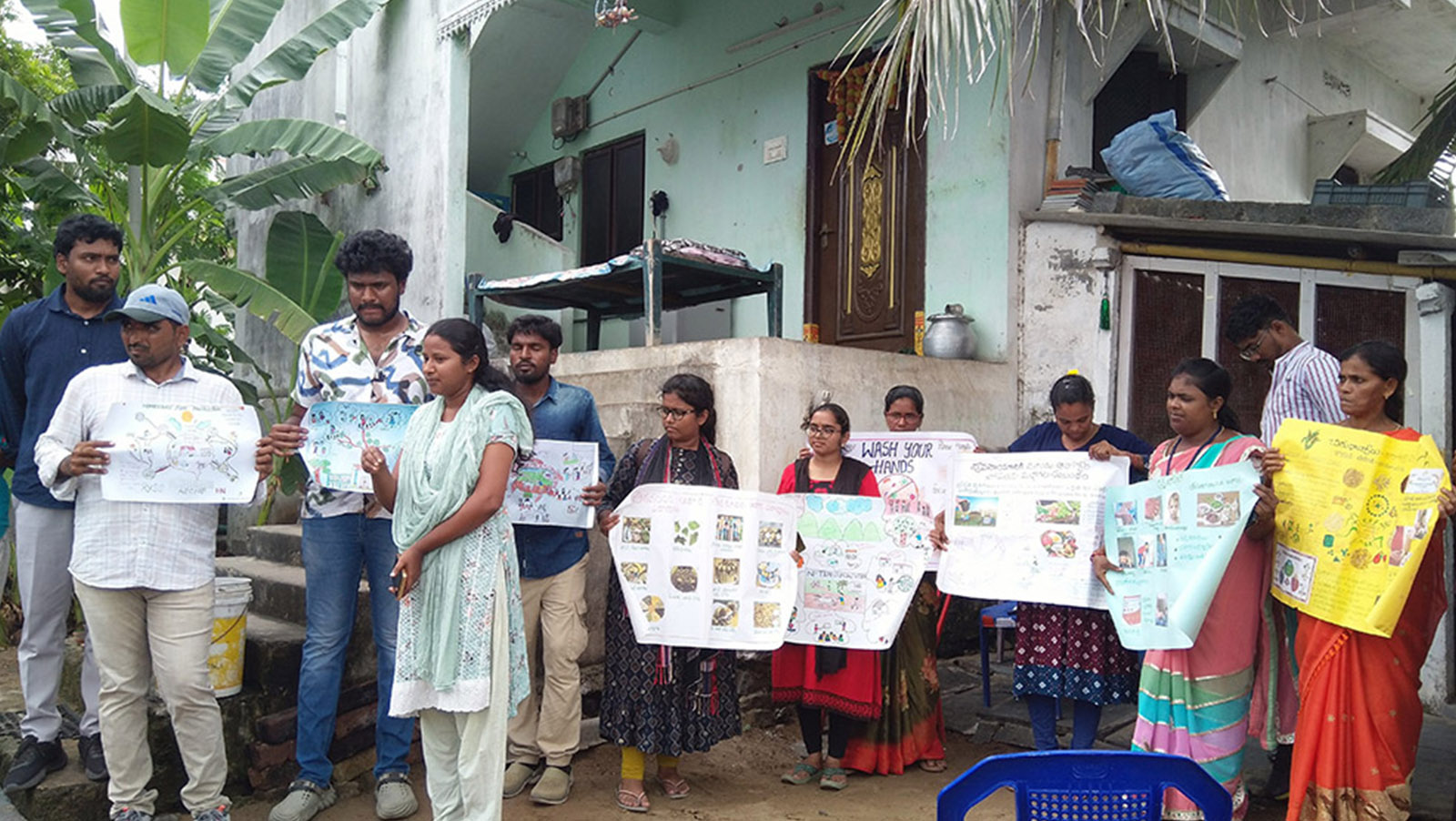
The Energy and Resources Institute (TERI), under its EIACP programme, hosted a vibrant one-day workshop “Breath of Change” on 12 August, 2025, at the Govt. Co-ed Senior Secondary School, Singhu (Narela), bringing together residents, students, Resident Welfare Associations, and environmental experts to champion cleaner air and sustainable waste practices.
The Energy and Resources Institute (TERI) proudly participated in the ‘Clean Air Blue Sky Day’ celebration organised by the Ministry of Environment, Forest, and Climate Change (MoEF&CC) on September 7, 2024, at the Jaipur Exhibition and Convention Centre, Rajasthan. TERI's stall featured cutting-edge interventions aimed at addressing urban air pollution, demonstrating its commitment to sustainable solutions across India.
On August 13, 2024, an orientation meeting for the Local Air Quality Management Plan was convened with stakeholders at the Bihar State Pollution Control Board (BSPCB) in Patna. This initiative, spearheaded by The Energy and Resources Institute (TERI) in collaboration with BSPCB, the Patna Municipal Corporation, and the Environmental Defense Fund (EDF), is focused on managing air pollution around two historic landmarks in Patna: Golghar and Shaheed Smarak.
A three-day program on capacity building for Ambient Air Quality Management was held in Kolkata at the West Bengal Pollution Control Board's Training Hall at Mani Square for staff members of the National Clean Air Program from different cities in West Bengal and other officials.
A recent report by the Air Pollution Action Group (A-PAG), IIT Delhi, and TERI highlights the significant contribution of heavy-duty vehicles to Delhi's air pollution and outlines evidence-based strategies to reduce freight emissions.
Two-wheelers contribute 20 per cent, whereas three-wheelers contribute less than 5 per cent of transport emissions. Currently, almost half of the three-wheelers are already non-fossil fuel, so their contribution is not 17-20 per cent as estimated by earlier studies, including the one by TERI in 2018.
A study by TERI, IIT Delhi, and the Air Pollution Action Group (A-PAG) found that heavy-duty trucks account for 23% of Delhi's transport-related PM2.5 emissions, with their contribution rising to 61% during early morning and nighttime hours.
The report, Towards Cleaner Freight in Delhi: Assessing Interstate Truck Emissions and Mitigation Strategies, was released by the Air Pollution Action Group (A-PAG) in collaboration with IIT-Delhi and The Energy and Resources Institute (TERI).
Heavy-duty trucks entering Delhi from other states are responsible for nearly a quarter of transport-related pollution in the Capital despite being allowed inside the city only during restricted hours each day, according to a new study by the Air Pollution Action Group (A-PAG), Indian Institute of Technology (IIT) Delhi and TERI.
Mr Sharif Qamar, Associate Director, Transport and Urban Governance Division, TERI stated that, with transport contributing about 25% of Delhi's winter air pollution, the electrification of the city's predominantly two-wheeler fleet could substantially reduce vehicular emissions.
Towards Cleaner Freight in Delhi: Assessment of Interstate Truck Emissions and Mitigation Measures is a joint study by TERI, Indian Institute of Technology Delhi (IIT Delhi) and Air Pollution Action Group (A-PAG). The report provides a holistic evidence-based assessment of interstate freight movement in Delhi-NCR by combining traffic activity, field surveys and real-world emissions measurements.
In response to extreme levels of fine particulate air pollution in India and the increasing recognition of its adverse health impacts, the Indian government launched the National Clean Air Programme (NCAP) in January 2019 (Ministry of Environment, Forest, and Climate Change, 2019). The NCAP aims to improve air quality in 131 cities, including non-attainment cities and Million Plus Cities across 24 states through a multi-stakeholder engagement approach. All 131 cities have developed city Action Plans (CAPs) and are being implemented by Urban Local Bodies.
Air pollution does not follow administrative boundaries, and needs to be tackled at the regional "airshed" level at which it is caused. Identifying the appropriate candidates for airshed management requires scientific analysis using systematically developed emissions inventories and dispersion models to simulate the impact of the estimated emissions on air quality.
As per TERI's analysis, of the total environmental pollution in 2016, the power sector reportedly accounted for 51% of sulphur dioxide (SO2), 43% of carbon dioxide (CO2), 20% of oxides of nitrogen (NOx), and 7% of PM2.5 emissions.
Residents of different cities (probably villages too) of India breathe some of the least healthy air of the globe. During 2017, about 76.8% of the population of India were exposed to annual population-weighted mean PM2·5 greater than the limit recommended by the National Ambient Air Quality Standards (NAAQ: 40 mg/m3) (Balakrishnan, Dey, Gupta, et al. 2019). Over last five years, the annual population-weighted mean ambient PM2·5 concentrations were significantly higher over the Indo- Gangetic Plain (IGP) region in comparison to other parts of the country.
India's transport demand has grown from a total of 5.3 million in 1981 to 230 million in 2016, with two-wheelers and cars having 73% and 14% share, respectively. Commercial vehicles though constitute only about 5% of the total fleet, contribute to nearly 80% of total PM emissions.
Phase-wise implementation of fleet modernization (transforming pre BS-IV commercial vehicles to BS-VI) would lead to a 40-80% reduction in PM and NOx emissions from the sector by 2025.