
This article summarizes about India’s winter air pollution, role of meteorology, emission sources and their mitigation, hidden drivers of winter pollution, and requirement of airshed-based approach, preventive action, and sustained emission reductions beyond emergency measures.
Winter Pollution in India
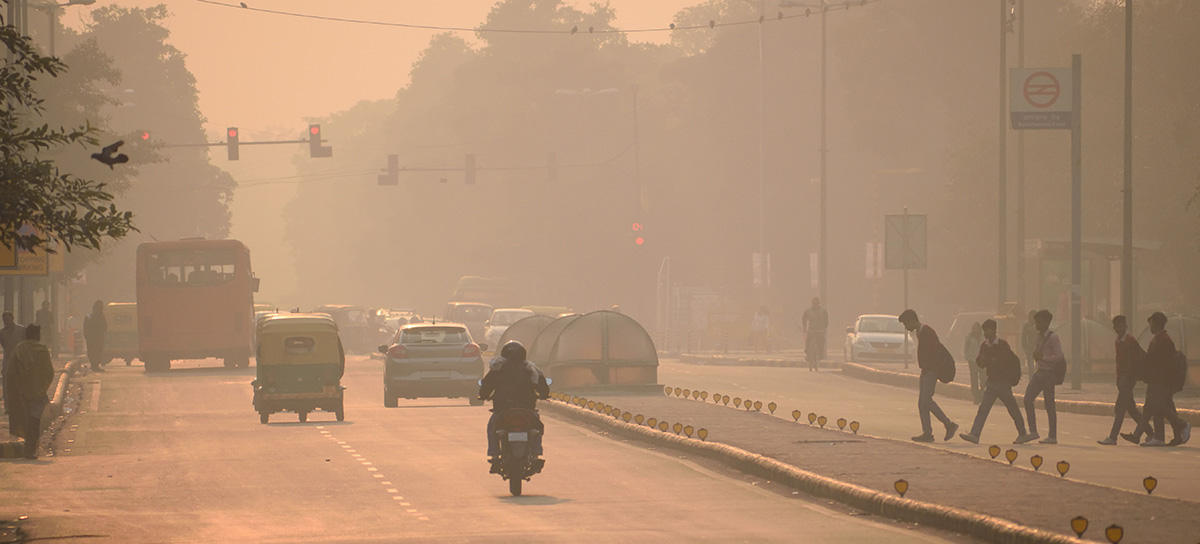
Air pollution poses significant threats to human health and ecosystems globally, especially during winter. Winter air pollution severity in India is extreme and recurrent, especially across the Indo-Gangetic Plain. During November–January, PM₂.₅ concentrations in many cities exceeded the Indian 24-hour standard (60 µg/m³) by 2–8 times and WHO guidelines by 20–40 times. The Air Quality Index (AQI) frequently remains in the “Poor” to “Severe” category for several consecutive days. This severity is driven by adverse winter meteorology combined with high anthropogenic emissions from transport, coal-based industry and power, waste burning, household biomass use, and seasonal practices, such as crop residue burning resulting in prolonged smog episodes and acute public-health impact.
Emergency measures (construction bans, truck restrictions, work-from-home advisories) help manage acute spikes but do not prevent the cycle from repeating in future. These actions help limit short-term exposure and provide only temporary relief and fail to address the structural drivers of winter pollution (CPCB, 2022; IIT Kanpur, 2016).
Role of Meteorology and Emission Sources
Winter meteorology plays a critical role in aggravating air pollution. Temperature inversions, low wind speeds, and shallow atmospheric boundary layers restrict vertical and horizontal dispersion, causing pollutants to accumulate near the surface (Guttikunda & Gurjar, 2012). However, meteorology alone does not generate pollution; it amplifies an already high emissions baseline. Emissions from vehicular exhaust, coal-based power and industrial activities, construction and road dust, waste burning, and crop-residue burning load the atmosphere well before winter begins. Consequently, emergency responses address the symptoms rather than the underlying causes of pollution.
Sources of Air Pollution
Transport sector is the one of the major sources of emission as studies consistently show that older diesel vehicles contribute disproportionately to winter PM₂.₅ and NOₓ loads (TERI, 2020; ICCT, 2021). Industrial and power-sector emissions remain another major contributor. Coal-based combustion sources are significant wintertime emitters of primary PM and precursor gases (SO₂ and NOₓ) that form secondary aerosols (CPCB, 2019). Industry and power generation must also undergo sustained transitions.
Agriculture remains a key seasonal driver. Crop-residue burning is a known, recurring contributor to winter pollution. Long-term solutions lie not in punitive bans alone, but in economically viable alternatives such as in-situ residue management, biomass aggregation, bioenergy, biochar, and assured markets for straw utilization. Aligning agricultural, energy, and industrial policies is crucial to eliminate this annual spike.
Hidden Drivers of Winter Air Pollution
Waste residue burning and wood burning for space heating are often overlooked contributors to winter air pollution. While policy attention frequently focuses on vehicular emissions and agricultural burning, open burning of municipal solid waste and household biomass combustion significantly elevate winter PM₂.₅ levels, particularly in dense urban and peri-urban areas.
During winter, colder temperatures increase demand for space heating, especially among low-income households and informal settlements with limited access to clean energy. Wood, agricultural residues, coal, and mixed waste are commonly burned in inefficient devices, resulting in high emissions of PM₂.₅, black carbon, carbon monoxide, and toxic organic compounds. Studies indicate that residential biomass and waste burning can contribute a substantial share of winter PM₂.₅, often comparable to or exceeding traffic emissions during night-time and early morning hours (CPCB, 2019; TERI, 2021).
Open burning of municipal solid waste (including plastics, packaging materials, textiles, and organic refuse) further worsens winter pollution. Such practices are widespread along roadsides, landfill peripheries, and construction sites often undertaken to reduce waste volume or recover metals. Under inversion conditions, emissions from waste burning remain trapped near the surface, intensifying local exposure and contributing to city-wide smog.
Mitigation Measures for Winter Air Pollution
Mitigating winter air pollution in India requires a shift from short-term emergency responses to sustained, preventive strategies that reduce emissions at source. In the transport sector, accelerated electrification of public buses and freight vehicles, phasing out older vehicles (pre-BS-VI), strengthening inspection and maintenance systems, and promoting a modal shift from road to rail can significantly lower winter PM₂.₅ and NOₓ emissions.
Industrial and power-sector emissions must be addressed through strict enforcement of emission standards, adoption of best available control technologies, continuous emissions monitoring, and gradual fuel switching away from coal toward cleaner energy sources. Continuous emissions monitoring and transparent compliance systems can ensure that reductions persist year-round rather than only during smog episodes.
Effective control of construction and road dust through mandatory dust-management plans, mechanised sweeping, and improved road infrastructure is equally important. In agriculture, eliminating crop-residue burning through in-situ management, biomass utilization, and assured markets for residues can prevent predictable seasonal pollution spikes.
Addressing open waste burning and household biomass use for space heating by improving waste management systems and expanding access to clean fuels such as LPG, piped gas, and electricity is essential.
Airshed Approach to Air Pollution Management
Equally important is governance at the airshed level, as air pollution transcends administrative boundaries and cannot be effectively managed through city-centric actions alone. When emissions originate beyond municipal or state limits, isolated local measures yield limited benefits. Frameworks such as the National Clean Air Programme (NCAP) recognize this reality by promoting inter-city and inter-state coordination. However, to achieve meaningful and sustained air-quality improvements, this approach must move beyond indicative targets toward enforceable regional implementation. Robust institutional arrangements, including statutory regional authorities, clearly defined shared responsibilities, binding targets, and coordinated financing mechanisms are required to translate cooperation into measurable pollution reduction. Air-quality forecasting and early-warning systems can further support coordinated, preventive action across states.
Summary and Conclusion
Emergency measures will continue to play a role during extreme pollution events, but they are insufficient to deliver sustained improvements in air quality. India’s winter air pollution crisis can only be resolved through long-term structural reforms that reduce emissions at source, integrate policies across sectors, adopt an airshed-based governance framework, and prioritize clean air as a core public-health and development objective rather than a seasonal emergency.
References
CPCB (2019). National Air Quality Status and Trends in India. Central Pollution Control Board (CPCB), Ministry of Environment, Forest and Climate Change (MoEFCC), Government of India.
CPCB (2022). Guidelines for Prevention and Control of Open Burning of Municipal Solid Waste. MoEFCC, Government of India.
IIT Kanpur (2016). Comprehensive Study on Air Pollution and Greenhouse Gases (GHGs) in Delhi. Source Apportionment and Emission Inventory Report for Delhi–NCR. IIT Kanpur
ICCT (2021). Vehicle emission standards and air quality impacts in India. The international Council on Clean Transport (ICCT).
TERI (2020). Air Pollution and Health Impacts from Household Energy Use in India. The Energy and Resources Institute (TERI), New Delhi.
TERI (2021). Residential Biomass Combustion and Winter Air Pollution in Indian Cities. TERI Policy Brief.
Guttikunda, S. K., & Gurjar, B. R. (2012). Role of meteorology in seasonality of air pollution in megacities. Atmospheric Environment, 44(24), 2922–2930.
MoEFCC (2019). National Clean Air Programme (NCAP). Ministry of Environment, Forest and Climate Change, Government of India.