


Headquarters
The Energy and Resources Institute (TERI)
Darbari Seth Block, Core 6C,
India Habitat Centre, Lodhi Road,
New Delhi - 110 003, India
In the post-Paris agreement era, accelerating climate action is the biggest hope to ensure a safe future for all. In India, our work focuses on climate modelling to develop a better understanding of climate variability at regional scales. We study the risks and vulnerabilities of key sectors such as water, health, agriculture and industry. Our work in climate science is inextricably linked to policy research and recommendations for the Indian government to shape its domestic policies, as well as contribute to its position in global negotiations. Through a number of initiatives, we are beginning to extend our knowledge and research in climate science and policy to other emerging economies.


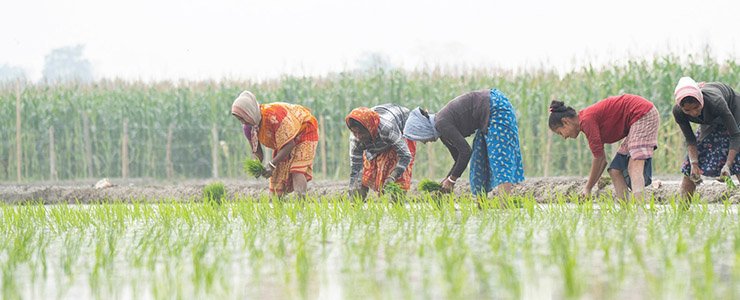
As the world marks Earth Day under the theme 'Our Power, Our Planet', it is a moment to recognize that transformative climate action is not driven by policy alone, but by people. Across rural India, communities are shaping more sustainable futures through everyday choices rooted in care for land, health, and livelihoods. This story from Andhra Pradesh highlights how women, often at the heart of households and communities, are harnessing that power to build resilient food systems and restore balance between people and the planet.
This article explores how rural women are not only coping with the impacts of climate change but are actively shaping the future of climate adaptation in India through leadership, collective action, and systems thinking.
On Earth Day 2026, themed “Our Power, Our Planet”, the spotlight is on the role each of us plays in shaping a sustainable future. While air pollution is often seen as a policy or technological challenge, its solutions lie just as much in everyday choices. In India, improving air quality will depend not only on systems and infrastructure, but on empowering citizens to become active participants in the air they breathe.
Every winter, a grey haze settles over many Indian cities. Schools close, hospitals see a rise in respiratory cases, and public debate intensifies over who is responsible for the pollution.
Air pollution continues to be one of the most visible and damaging environmental challenges across Indian cities, particularly in northern and urban regions where poor air quality has become a recurring health emergency.
The Himalayan State Uttarakhand stands today at the frontline of climate change.
Transport is central to meeting national climate goals. Yet transport-specific targets remain uneven across Nationally Determined Contributions (NDCs), creating a gap between national climate commitments and the policies and investments needed to translate them into action.
Online Launch of Innovate4Environment: A UK–India youth skills programme focused on building climate-relevant technical and employability skills among young people.
WSDS 2026 reinforced a shared commitment to move from ambition to execution by scaling solutions and building a climate-secure, resilient, and equitable future demonstrating that the time for collective action is now.
The Act4Earth framework will emphasize strengthening multilateral cooperation, leveraging technology and innovation, and embedding sustainability across policy and economic systems to enable inclusive transitions.
SGP India is organising a Thematic Track at the WSDS 2026 on "Women at the Frontlines of Climate Action, Biodiversity & Land Restoration -Community-Led Pathways to achieve SDGs".
This session brings together policymakers, UN agencies, corporates, knowledge partners, media, and civil society to advance dialogue, learning, and collaboration on women-led, community-based climate action. Specifically, it seeks to:
Dr Shailly Kedia, Senior Fellow & Director, Resource Efficiency & Governance Division, The Energy and Resources Institute (TERI) emphasised that climate justice requires recognising countries’ different starting points and national circumstances, with CBDR-RC remaining central to COP31 discussions on climate finance, adaptation, and broader climate negotiations.
Mr R R Rashmi, Distinguished Fellow & Programme Director, Resource Efficiency & Governance Division, The Energy and Resources Institute (TERI) and former Indian climate negotiator, highlighted that India’s rising GHG emissions are closely linked to growing energy access, industrialisation, urbanisation and cooling demand, while distinguishing these from local air-pollution concerns.
As Türkiye prepares to host COP31 in Antalya from Nov. 9–20, with the conference framed as an "Implementation COP" focused on turning climate commitments into tangible progress, Indian environmental expert Dr Vibha Dhawan, Director General, The Energy and Resources Institute (TERI) says the urgency is growing as vulnerable communities face increasingly severe climate impacts.
NRDC-TERI convene Climate Conversation 2026 to discuss COP31, India's clean energy transition, climate finance, global cooperation and implementation challenges
India's steel sector must adopt a phased decarbonisation strategy that mandates proven low-cost measures while financing and de-risking emerging technologies to manage rising domestic and international carbon pressures, writes Mr Sidharth Sinha, Consultant, TERI.
India's CSR framework should evolve from grant-based funding toward catalytic capital that leverages private finance for inclusive growth, sustainable livelihoods and climate-resilient development, write Ms Leena Nandan, Distinguished Fellow and Mr Sidharth Sinha, Consultant, Earth Science and Climate Change Division, The Energy and Resources Institute (TERI).
Short-Lived Climate Pollutants (SLCPs) and other non-CO₂ air pollutants play a significant role in driving near-term climate change and worsening air quality, with direct implications for public health, agriculture, and ecosystems. While carbon dioxide remains the principal focus of long-term climate mitigation efforts, pollutants such as methane, black carbon, hydrofluorocarbons, and tropospheric ozone offer important opportunities for achieving faster climate benefits through targeted emission reductions.
To address the urgent need for aligning commercial capital with sustainable development, The Energy and Resources Institute (TERI) launched a forward-looking discussion paper titled, A Five Pillar Framework for Bankability: Recalibrating India’s Commercial Finance for Climate Action.
Authored by Mr Sidharth Sinha (Senior Fellow, TERI) and Dr Manish Kumar Shrivastava (Associate Director, TERI), the paper draws on extensive consultations with commercial banks, regulators, development finance institutions, and policy experts.
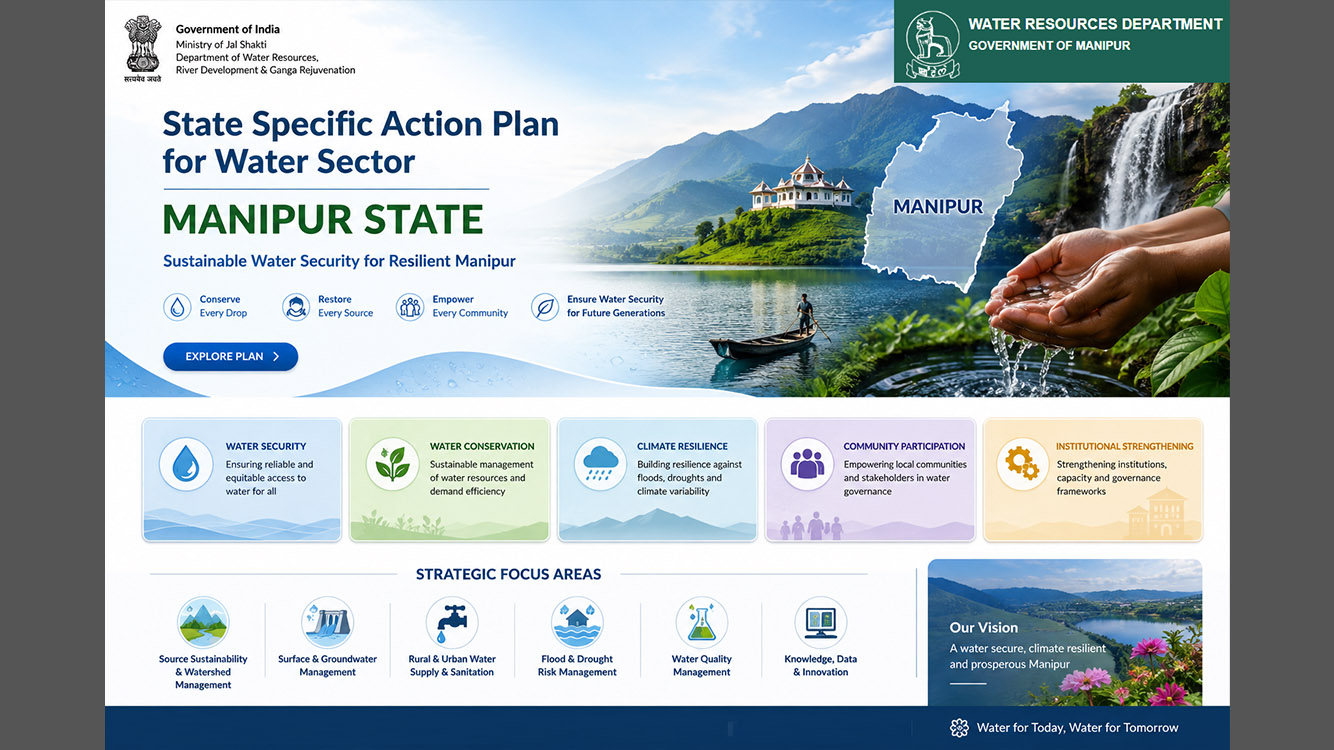
The scope of this ongoing project focuses on conducting the First Spring Census of potential springs across Manipur in accordance with the national spring census guidelines. The work involves systematic identification, geo-tagging, and documentation of springs to establish a baseline inventory capturing their spatial distribution, typology, discharge characteristics, seasonal variability, and usage patterns.
This brief summarizes the findings of the Responsible Agri-PV Baseline Assessment conducted by The Energy and Resources Institute (TERI) under the Responsible Energy Initiative (REI) India. The study examines an institutional agrivoltaics (Agri-PV) pilot implemented by Renkube Pvt. Ltd. in collaboration with Professor Jayashankar Telangana State Agricultural University (PJTSAU).
The primary focus of this assessment is to evaluate the feasibility of co-locating solar power generation with active agriculture in the semi-arid, water-stressed conditions typical of Telangana.
The 30th annual meeting of the Conference of the Parties (COP30) to the United Nations Framework Convention on Climate Change (UNFCCC) and 7th meeting of the CMA1 convened in Belém from 10- 22 November 2025. This marked a decade since the adoption of the Paris Agreement in 2015. The Brazilian presidency framed the meeting as the “Global Mutirão”, a collective effort to move from commitments to implementation. It approached its leadership by prioritising partnerships not only among countries but also with institutional actors within and beyond UNFCCC.
We generate climate projections at global and regional scales and impacts, vulnerability and adaptation assessments in key sectors using established models and our in-house super-computing facility. We also conducts GHG inventorization and mitigation analysis. We provide national and international policy analysis and review, and contribute to key issues in negotiations encompassing adaptation, mitigation, technology, and finance.