Headquarters
The Energy and Resources Institute (TERI)
Darbari Seth Block, Core 6C,
India Habitat Centre, Lodhi Road,
New Delhi - 110 003, India
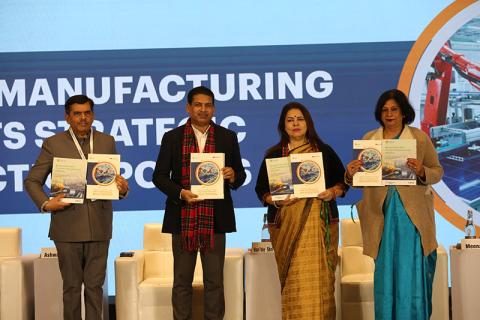
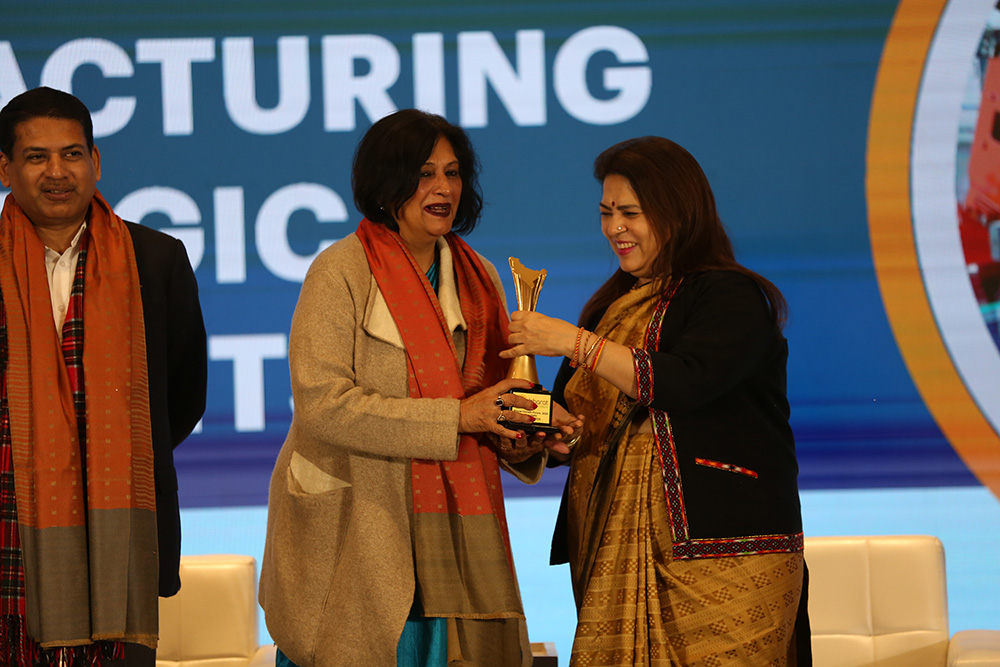
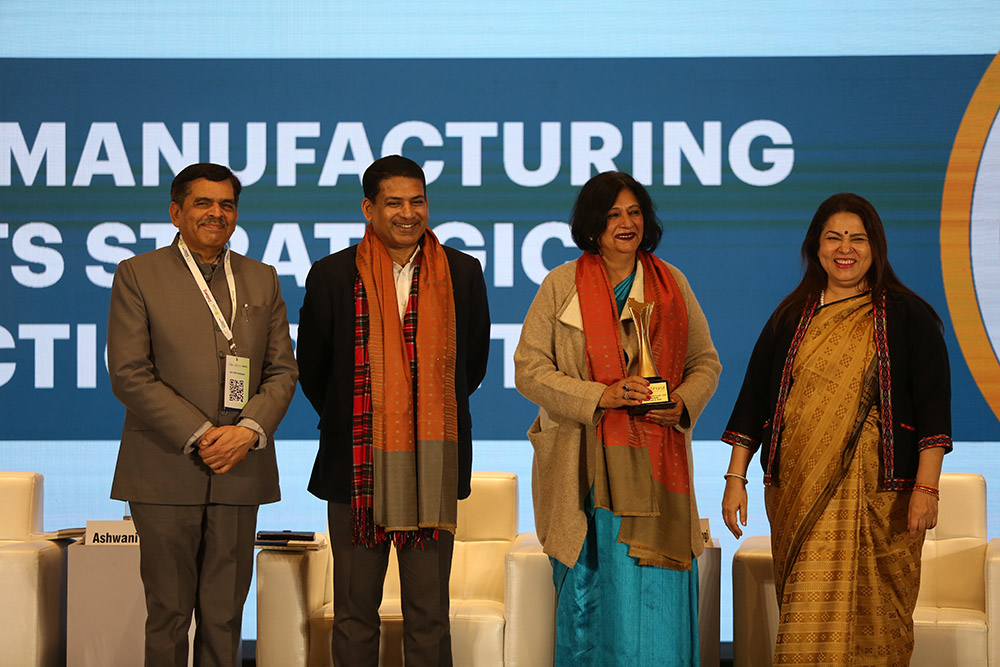
“India’s PV Manufacturing & Its Strategic Inflection Points” released during the launch of the National Cleantech Manufacturing Implementation Plan at Bharat Climate Forum 2026
New Delhi, January 9, 2026: The Energy and Resources Institute (TERI) today released a landmark report titled, “India’s PV Manufacturing & Its Strategic Inflection Points” at the Bharat Climate Forum (BCF) 2026, held at ITC Maurya, New Delhi. The report was unveiled during the formal launch of India’s National Cleantech Manufacturing Implementation Plan, in the presence of senior government leaders, global institutions, industry, and finance stakeholders.
The release took place during a dedicated session in the evening, with Dr Vibha Dhawan, Director General, TERI, present at the launch. The report provides a strategic assessment of India’s solar photovoltaic (PV) manufacturing ecosystem and outlines policy, financing, and industrial interventions required to strengthen India’s global competitiveness across the value chain. About the report, Dr Dhawan said, “TERI’s landmark macro-level study, Reassessment of Solar Potential in India, points to a horizon of unparalleled abundance: an aggregate solar potential exceeding 10,800 GW, spanning multiple modalities including ground-mounted, rooftop, and other emerging deployment pathways. This abundance changes the strategic question in front of us. When a country has this scale of clean energy opportunity, the issue is no longer whether we can deploy enough solar. The real question is whether we will capture enough value at home through manufacturing, technology, skills, and resilient supply chains, while keeping electricity affordable for households and industry.”
While formally launching the report, Shri Santosh Sarangi, Hon’ble Secretary, Ministry of New and Renewable Energy, highlighted the need to strengthen India’s renewable energy ecosystem and scale clean energy deployment, stating, “India’s renewable energy journey over the last decade has been nothing short of spectacular, marked by phenomenal leapfrogging in global rankings. Our strategy has been defined by a single-minded national objective pursued across three clear verticals: accelerating RE deployment, achieving Atmanirbharta (self-reliance) in manufacturing, and driving higher citizen adoption. Through a strategic combination of policy initiatives and trade instruments, we have scaled our solar capacity from a mere 2.63 GW in 2014 to over 134 GW today. This transition is not just about capacity; it is about building a resilient, self-sufficient ecosystem that serves as a blueprint for global energy shifts.”
The report notes that while India has built significant strength in module manufacturing, with domestic module capacity far exceeding current annual demand, critical vulnerabilities persist upstream. India continues to import nearly all of its polysilicon and the vast majority of wafers, creating risks that could constrain future solar deployment if upstream capacity is not established in time.
According to the study, tool chains and manufacturing equipment are emerging as a key chokepoint, with a heavy reliance on imported high-end furnaces, deposition tools, and precision equipment. Without focused incentives for domestic equipment manufacturing and accelerated R&D, these dependencies could expose India’s solar sector to supply-chain disruptions, foreign exchange volatility, and geopolitical risks.
The report underscores that access to affordable, blended finance will be decisive in enabling large-scale upstream investments. It highlights the role of sovereign “Green-PV” bonds, co-equity participation by national investment institutions, concessional debt from development finance institutions, and risk-mitigation instruments in reducing the cost of capital and improving the bankability of upstream fabs.
The study further recommends the development of Solar–Semicon Technology Parks, shared pilot fabs for next-generation technologies, and a dedicated PV–Semicon Skill Council to strengthen innovation pipelines and workforce readiness, with a particular emphasis on linking incentives to skilling outcomes and greater participation of women in manufacturing.
The report release formed part of a broader set of high-level discussions at BCF 2026, which featured addresses by Shri C P Radhakrishnan, Hon’ble Vice-President of India, Union Ministers, and global leaders, positioning climate action, cleantech manufacturing, and resilience as central pillars of India’s growth strategy. On India’s cleantech manufacturing vision and the role of domestic manufacturing in strengthening climate and economic resilience, the Hon’ble Minister said, “A developed India cannot be built on imported technologies, fragile supply chains, or outdated energy systems alone. It must be built on homegrown clean technologies, resilient manufacturing, and a future-ready workforce”.
The Bharat Climate Forum brought together senior policymakers, global leaders, and experts from institutions including the United Nations, World Bank Group, International Renewable Energy Agency (IRENA), Asian Development Bank, International Solar Alliance, Coalition for Disaster Resilient Infrastructure, NABARD, State Bank of India, and leading private sector and financial institutions.
Throughout the day-long plenary, discussions focused on clean energy transition, climate-resilient growth, cleantech manufacturing, long-term climate finance, digital and green convergence, and governance reforms needed to deliver a green, resilient, and Viksit Bharat.
Union Ministers addressed key priorities for India’s climate and development agenda, highlighting policy direction, implementation pathways, and the role of finance and industry in accelerating the transition. Regarding India’s power, housing, and urban transition priorities and their role in driving low-carbon growth, Shri Manohar Lal Khattar, the Hon’ble Union Minister for Power, Housing and Urban Affairs said, “India has rapidly transitioned towards clean energy. Non-fossil fuel sources now account for over 51.5% of our total installed capacity, achieved five years ahead of our 2030 target. Since 2014, we have added 178 GW of renewable energy, and our solar capacity has grown nearly 47 times from 2.83 GW to 133 GW, making India the world’s third-largest producer of solar power”.
The Forum also featured a valedictory ministerial address reflecting on India’s leadership role in global climate action and the importance of aligning national ambition with international collaboration.
The TERI report can be accessed here.