
Headquarters
The Energy and Resources Institute (TERI)
Darbari Seth Block, Core 6C,
India Habitat Centre, Lodhi Road,
New Delhi - 110 003, India
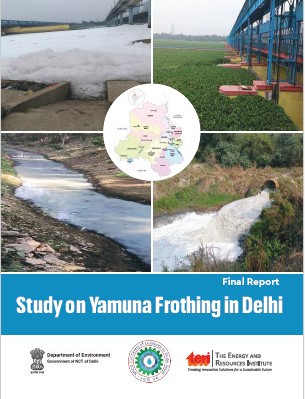
The project “Study of Yamuna Frothing in Delhi” was commissioned by the Department of Environment, Government of NCT of Delhi (GNCTD), and was successfully completed during 2024–2025. This comprehensive study was designed to investigate the complex causes of seasonal frothing in the Yamuna River and to develop a robust roadmap for its mitigation.
Research Objectives and Scope The study focused on identifying the scientific correlation between pollutant inflows and the visible formation of foam in the river. Key areas of investigation included:
Key Findings The research highlighted that froth formation is primarily driven by high pollutant loads, specifically surfactants and nutrients such as ammonia and phosphate. These elements, largely originating from untreated wastewater and laundry clusters, interact with the river's flow to create persistent foam. The study identified significant contributions from both anthropogenic activities and natural environmental factors, pinpointing critical hotspots that require urgent intervention.
A Roadmap for Restoration To address these challenges, TERI developed a tiered action plan categorized into short-term, medium-term, and long-term strategies. These recommendations emphasize:
By combining rigorous field data with enforcement-ready strategies, this study provides a foundational blueprint for effective river restoration and the long-term mitigation of surfactant pollution in the Yamuna.
For Project Report Click Here