
Headquarters
The Energy and Resources Institute (TERI)
Darbari Seth Block, Core 6C,
India Habitat Centre, Lodhi Road,
New Delhi - 110 003, India
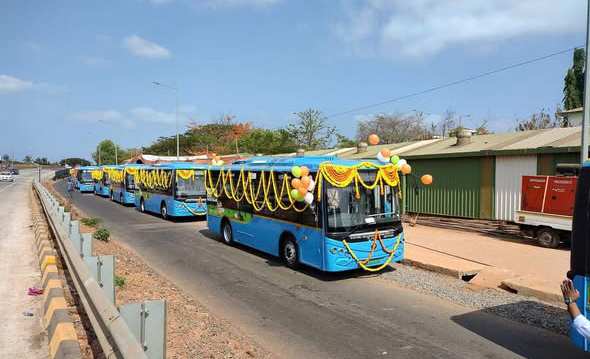
TERI has undertaken socio-economic and environmental impact study of e-Bus services in Panaji. Under the Panaji Smart City e-bus project, Kadamba Transport Corporation Limited (KTCL) has deployed 48 electric buses on internal routes and the outer circle of the city as a step towards decarbonizing the public transport sector. Imagine Panaji Smart City Development Limited (IPSCDL) has funded for 22 EVs and 26 EVs are procured from the funds allotted by the Central Government under Goa@60. Further, to support and strengthen this transition to green mobility an ecosystem of public charging infrastructure, smart transit card and digital ticketing app have also been introduced.
As the city moves to decarbonize mobility and improve the public transport infrastructure, it is critical to capture and analyse the early impacts of such transition which can inform the future investments and strategic decision making. Understanding the customer preferences, their travel choices and potential enablers for choosing bus travel as crucial to plan and implement a robust and successful public bus system. The study aimed to provide actionable insights into future deployment of electric buses while ensuring that the transition is operationally successful, socially acceptable and environmentally beneficial.
The study was a short-term, focused cross-sectoral assessment of the impact of electric bus deployment in Panaji, examining stakeholder experiences, operational efficiency, and environmental benefits. The findings help validate the initiative’s benefits and identify opportunities for scaling up at both operational and infrastructure levels. The key objectives included:
The study highlights Panaji’s e-Bus network as a strong example of how a well-designed electric bus system can achieve high commuter acceptance, deliver measurable environmental benefits, and generate tangible cost savings for users. As a pioneer of conductor-less operations supported by an Automatic Fare Collection System (AFCS), the city also faces challenges in encouraging wider adoption of digital ticketing.
The findings position Panaji as an important case study for identifying on-ground challenges and developing practical solutions. To convert early success into system maturity, a set of operational and institutional interventions is recommended. These include realigning bus schedules and bus sizes across routes, and introducing targeted social measures such as easier ticketing, tourist incentives, and gender-responsive initiatives to expand mode shift beyond captive bus users.
With focused operational realignment and institutional strengthening, Panaji has the potential to transform a promising pilot into a high-impact, scalable e-Bus model for Goa and other peer cities.