






Headquarters
The Energy and Resources Institute (TERI)
Darbari Seth Block, Core 6C,
India Habitat Centre, Lodhi Road,
New Delhi - 110 003, India
Our work in the transport sector aims at low-carbon modes of transport that are sustainable and inclusive in nature. We have pioneered policy research in this sector with expertise in issues related to energy efficiency and emissions modeling. Among others, our focus areas include electric vehicles, railways, urban transport.


Strengthening integrated urban mobility and planning in Thoothukudi is about building a system that is safe, inclusive, reliable, and resilient to climate risks.
Thoothukudi has been designated as a non-attainment city under India’s National Clean Air Programme (NCAP).
Follow the first principles of reducing transport emissions in enhancing fuel efficiency and promoting zero emission vehicles.
Between 1992 and 2015, official estimates recorded 24,223 deaths caused by heatwaves, earning it the labels of a “silent killer” or an “invisible disaster.”
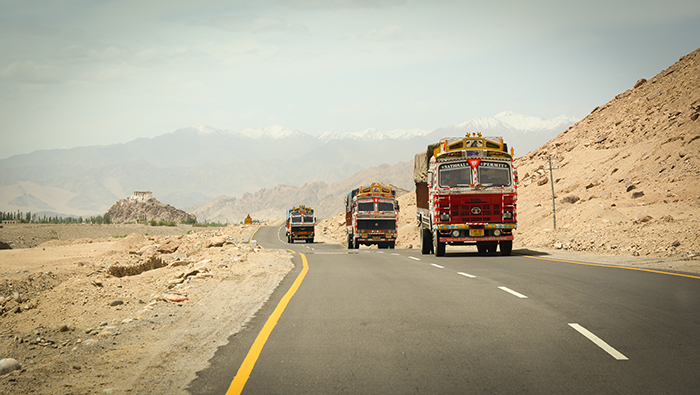
Trucks have gradually become a dominant mode of freight transport, replacing the railway, the traditional bulk commodity carrier. Crisscrossing through the country, trucks are responsible for nearly 40 percent of carbon emissions and air pollution in the urban areas.[1]
Transport is central to meeting national climate goals. Yet transport-specific targets remain uneven across Nationally Determined Contributions (NDCs), creating a gap between national climate commitments and the policies and investments needed to translate them into action.
The roundtable aims to provide a structured platform for dialogue among policymakers, regulators, recycling yard representatives, shipowners, classification societies, financiers, and sustainability experts.
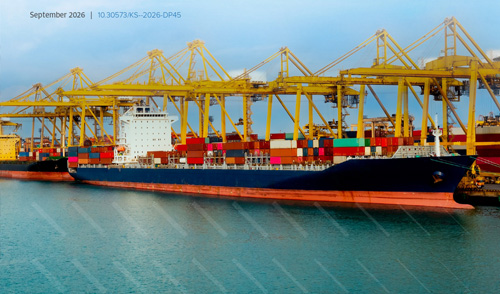
India’s maritime sector is entering a decisive phase of expansion, driven by rising trade volumes, industrial corridors and coastal development. Ports sit at the intersection of shipping, logistics, industry and energy systems, and their operational footprint increasingly shapes both national emissions trajectories and local environmental outcomes. Historically, port development has focused on capacity expansion and efficiency, with environmental performance treated as a secondary consideration.
Presently, India is the third largest automotive manufacturer in the world, contributing to 7.1 per cent of India’s GDP, providing direct and indirect jobs to 19 million people. The transport sector is one of the most polluting sectors with road transport presently accounting for 13 per cent of India’s energy-related CO2 emissions. To mitigate pollution and achieve its 2070 net zero target, the nation is focusing on decarbonizing transport through various initiatives. Electrification of vehicles is a crucial measure towards the decarbonization of transport in India.
The Energy and Resources Institute (TERI), in partnership with Artha Global, convened a National Workshop on Clean Air Zones (CAZ) to share technical insights, implementation experiences, and financing pathways for improving urban air quality through corridor-focused interventions. The workshop presented ongoing CAZ pilot work in Vijayawada and Visakhapatnam and discussed how such approaches can support cleaner and more livable urban streets.
TERI Study highlights that economic considerations emerge as a key determinant of fuel suitability, alongside infrastructure, environmental performance and energy security.
The Energy and Resources Institute (TERI), under the aegis of the Petroleum and Natural Gas Regulatory Board (PNGRB), conducted a study titled "Comparative Assessment of Vehicular Fuels in India’s Energy Transition: A Multi-Dimensional Approach." The findings of the study were released on 30 September 2026 at Hotel Taj Mahal, New Delhi.
India’s shift away from petrol and diesel is unlikely to follow a single-technology pathway, with electric vehicles, CNG and LNG expected to play different roles depending on vehicle type, operating economics and infrastructure availability, according to a study by The Energy and Resources Institute (TERI).
According to a study by The Energy and Resources Institute (TERI), Delhi has the strongest CNG infrastructure among the cities assessed, while Delhi and Bengaluru have comparatively well-developed electric vehicle (EV) infrastructure.
TERI study finds CNG offers a favourable balance for passenger and commercial vehicles, EVs emerge as a stronger option for two- and three-wheelers.
India’s transition towards cleaner transportation should follow a diversified, vehicle-specific approach rather than relying on a single fuel or technology, says a new study by The Energy and Resources Institute (TERI), which highlights the need to balance affordability, emissions, energy security and infrastructure readiness.
India generated about 342 million tonnes of fly ash in 2025-26, out of which Indian Railways transported about 13 million tonnes, accounting for nearly 4 per cent of the total fly ash generated. Given its fine particle size (0.3-250 microns), fly ash can easily become airborne, posing significant environmental and public health risks. Transforming fly ash from a potential pollutant into a valuable resource requires sustainable utilization pathways supported by efficient, safe, and environmentally responsible transportation systems.
Uttar Pradesh stands at the forefront of India’s clean mobility transition. As the nation’s most populous state and one of its largest automotive markets, Uttar Pradesh possesses a unique opportunity to spearhead the future of sustainable transportation. Accelerating this shift not only addresses urgent air quality challenges but also serves as a powerful catalyst for state-led economic growth and industrial modernization.
India’s freight transport demand is witnessing a significant rise, projected to increase from 2,682 billion tonne-kilometres (BTKM) in 2019-20 to 7,260 BTKM by 2030-31, with road freight expected to account for approximately 85 per cent of the total movement. Continued reliance on road transport, coupled with the sector’s dependence on fossil fuels, poses critical challenges for India’s long-term energy security and climate mitigation goals.
Freight transport is the backbone of India’s economy, but it is also one of the most emissions-intensive parts of the transport system. Despite accounting for a small share of the vehicle fleet, road freight contributes disproportionately to greenhouse gas and air-pollution emissions. As freight demand continues to grow, the absence of credible, standardised emissions measurement risks locking in high emissions for decades.
The transport sector is India’s third-largest emitter, accounting for approximately 12 per cent of energy-related CO₂ emissions, with road transport contributing over 90 per cent of total transport emissions. Passenger vehicles (PVs) are growing rapidly in India. Even though car ownership in India (cars per 1,000 population) remains low (~35) compared to Japan (496), China (195), the USA (588), and Germany (582), absolute vehicle numbers are rising quickly due to population growth and rising incomes.
Globally, road vehicles contribute 20 per cent of CO2 emissions; yet trucks, which account for less than 1 per cent of the total vehicle fleet, contribute approximately 35% of those emissions. In India, the situation is similar: while making up only 3 per cent of road vehicles, commercial trucks are responsible for 34 per cent of the road transport sector's CO2 emissions. Though this segment is carbon-intensive, it remains essential for the country’s economic development.