Headquarters
The Energy and Resources Institute (TERI)
Darbari Seth Block, Core 6C,
India Habitat Centre, Lodhi Road,
New Delhi - 110 003, India
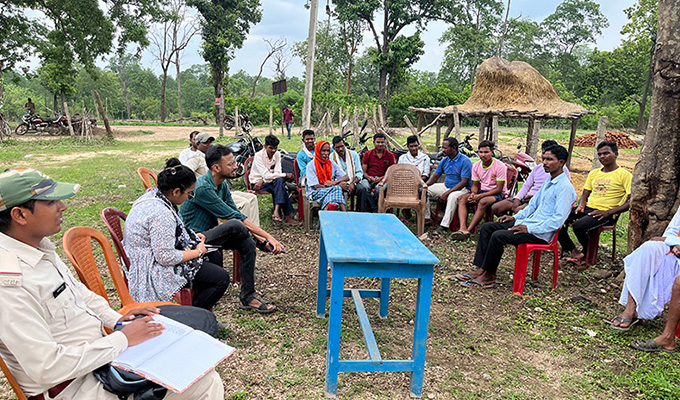
Forests provide a wide range of ecosystem services; however, it is inherently challenging to place a monetary value on many of these. As a result, the full contribution of forests to the economy is often unaccounted for, and decisions regarding the allocation of financial resources are frequently based only on the value of services with a clear price tag. It is essential, therefore, to undertake a comprehensive valuation of forest ecosystem services and provide these results to planners and policymakers. Such an exercise is particularly significant for forest-rich states like Chhattisgarh, which has nearly 41 per cent of its geographical area under forest cover. This extensive greenery makes the state a critical hub of biodiversity and a key regulator of ecological balance in India.
The Total Economic Value (TEV) of forests should reflect their full contribution to human well-being, including benefits derived from "natural capital." While successive Finance Commissions have recommended including environmental considerations within India’s tax devolution mechanisms, mainstream income accounts currently remain restricted to a narrow set of activities. These typically cover only major products such as timber, fuel wood, bamboo, fodder, and minor forest produce.
Recognizing this gap, the Chhattisgarh Forest Department (ChFD) has launched a transformative initiative to identify, map, and evaluate the economic contribution of forest ecosystem services and explore their integration into the State Domestic Product (SDP). This effort represents a vital step toward ensuring that ecological sustainability and economic development are pursued in tandem. The project aims to:
Select a suitable framework for assessment.
Identify and quantify different categories of ecosystem services (provisioning, regulating, supporting, and cultural).
Prepare environmental accounts based on the System of Environmental-Economic Accounting (SEEA).
Develop training programs and manuals to build institutional capacity for ecosystem service valuation across the forest department and allied agencies.
This approach will enable policymakers to conduct robust economic analyses of development interventions, assess trade-offs between conservation and development, and ensure that long-term ecological benefits are fully factored into planning. Furthermore, this information will aid in internalizing environmental externalities by informing appropriate fees for natural capital damage, determining compensation for affected communities, and optimizing mitigation strategies by prioritizing high-value ecosystem services.