Headquarters
The Energy and Resources Institute (TERI)
Darbari Seth Block, Core 6C,
India Habitat Centre, Lodhi Road,
New Delhi - 110 003, India
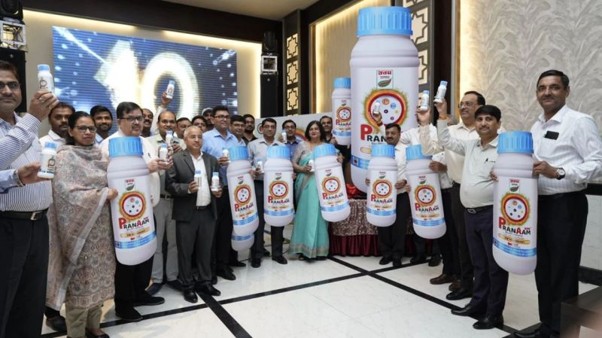
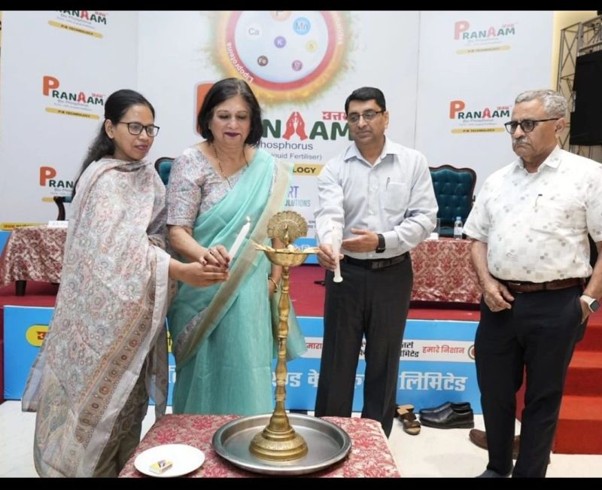
On April 22nd, 2024, Dr Vibha Dhawan, DG, TERI launched biogenic nano Phosphorous (nanoP) with commercial partner Chambal Fertilisers and Chemicals Limited, under the brand name UTTAM PRANAAM BIO NANO PHOSPHORUS.
The product, developed by a team of researchers and bio-fermentation specialists led by Dr Pushplata Singh, is a unique, power-packed formulation containing over a billion nanoparticles to supply phosphorous to plants. It also contains multiple other nutrients, including calcium, sulfur, manganese, magnesium, and potassium, which make crops healthy and resistant to abiotic and biotic stress. Enabled with PEB technology, and with possible application modes including fertigation, seed treatment, and foliar application, Bio-Nano-P is poised to be a game-changer for enhancing the Nutrient Use Efficiency (NUE) of P fertilizers.
The nanoP product shows a yield benefit from treatments of seeds, roots, and foliage. Seed treatment and root dipping help in the quick absorption of nano phosphorous nanoparticles. With such a treatment, the seed becomes healthy and stores a good supply of phosphorous for robust vegetative growth of the plant. The second treatment, a foliar application at 40-50 days after sowing, boosts reproductive growth, flower development, and seed setting.
The size of the nanoP nanoparticles is 10-15 nm, which remains stable under various environmental conditions. The problem with conventional phosphatic fertilizers is that they get fixed in the soil, and only around 20% of the applied amount is taken up by the plant. Conventional phosphatic fertilizers, therefore, pollute the soil, alter the soil structure, and make it lifeless, rendering it unsuitable for the sustenance of beneficial rhizospheric microbes, ultimately affecting crop yield. In contrast, nano P nanofertilizer shows a NUE of around 90-95%. The remaining 5-10%, even if it falls on the soil, remains stable across all different kinds of soil, with varying pH and salinity, and gets absorbed by the plants in one to two days.