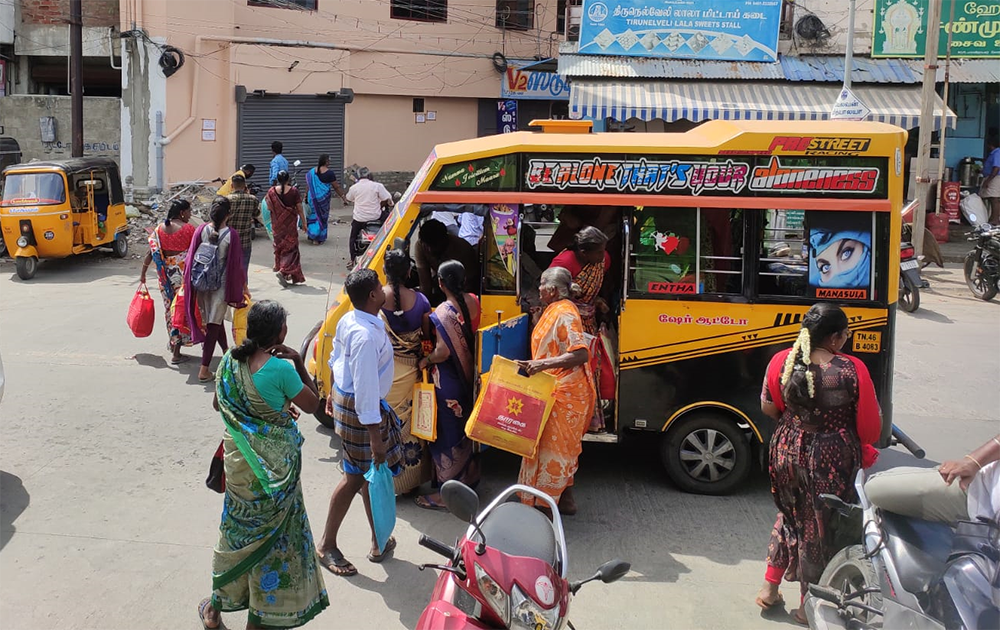
Strengthening integrated urban mobility and planning in Thoothukudi is about building a system that is safe, inclusive, reliable, and resilient to climate risks.
Introduction: A Port City at a Mobility Crossroads
Thoothukudi, also known as Tuticorin, stands at a pivotal stage in its urban mobility planning and economic development trajectory. As one of Southern India’s most important maritime hubs, the city’s growth is anchored by the V.O. Chidambaranar (VOC) Port. It is Tamil Nadu’s second largest port and the country’s third largest container terminal. Positioned as a rapidly expanding Tier II port and industrial centre, Thoothukudi plays a strategic role in enabling regional and national trade flows. Its economy is shaped by a diverse set of drivers, including shipping and logistics, energy production, salt manufacturing, and marine-based livelihoods. Thoothukudi contributes 70% of Tamil Nadu’s total salt production and meets nearly 30% of India’s salt requirements[1], underscoring its national significance. Industrial activity is robust, with approximately 736[2] operational factories, 377 of which lie within the municipal limits. Collectively, these economic forces have spurred steady population growth, urban expansion, and escalating travel demand, positioning Thoothukudi as an emerging economic and logistics powerhouse in Tamil Nadu.
However, the city’s rapid economic expansion has simultaneously intensified pressures on its transport infrastructure. Between 2022 and 2025, the number of registered vehicles in Thoothukudi increased by nearly 18% [3] reflecting a growing dependence on private motorised transport. Rising vehicle ownership and growing congestion are straining mobility systems, while persistent safety challenges continue to affect pedestrians and cyclists. A total of 165 road accidents[4] were recorded between 2023 and 2025 highlighting road safety issues. In addition, increasing exposure to climate risks such as flooding, heat stress, and cyclonic disturbances is further reshaping mobility patterns across Thoothukudi. Nearly 30% of the composite local planning area (CLPA) is vulnerable to flooding[5]. These trends reinforce both climate and safety-related concerns.
Strengthening integrated urban mobility and planning in Thoothukudi is about building a system that is safe, inclusive, reliable, and resilient to climate risks; one that supports both people’s daily commuting needs and the city’s long-term growth. This technical blog draws from a comprehensive Gap Assessment and Stakeholder Consultation study undertaken as part of the UK PACT (Partnering for Accelerated Climate Transitions) programme in Thoothukudi. It examines the current urban mobility planning landscape in Thoothukudi and discusses how targeted, climate-inclusive interventions can strengthen existing systems and position the city as a model for sustainable urban mobility planning in Tier-II Indian cities.
Why Urban Mobility Planning and Climate Must Be Planned Together
Urban mobility planning in Thoothukudi reflects the broader challenges confronting many rapidly expanding Indian cities. While economic activities intensify and the urban footprint continues to grow, transport infrastructure and governance framework often struggle to keep pace. As of December 2025, Thoothukudi had 3.6 lakhs registered vehicles, with over 79% being two-wheelers, followed by 11% cars and 6% commercial vehicles, reflecting a strong reliance on two-wheelers.
Public buses (41 TNSTC and 58 private operators are operating) continue to serve as the primary mode of mass transport; however, issues related to service quality, network coverage, and first and last mile connectivity persist. Currently, 37% of daily commuters rely on buses, yet nearly 51% depend on motorised modes for their first and last mile, highlighting significant gaps in non-motorised and shared mobility options.
At the same time, climate risks are becoming increasingly visible in travel patterns. Flooding during heavy rainfall disrupts road networks, heat stress reduces walkability, and cyclonic events threaten the reliability of transport services. Survey findings show that more than one-third of commuters experience weather-related travel disruptions, while over a quarter report skipping or cancelling trips during extreme conditions, resulting in economic losses and reduced access to livelihoods.
These patterns highlight a critical insight: urban mobility planning that ignores climate resilience and social inclusion risks locking cities into high-cost, high-carbon, and inequitable pathways.
Methodological Approach: A Multi-Layered Gap Assessment
The Thoothukudi gap assessment adopted a structured, evidence-based methodology that combines three complementary lenses.
First, a policy and plan review was conducted using a SWOT-based framework to assess how existing statutory and non-statutory documents align with climate-inclusive mobility principles. Key documents reviewed include,
- Draft GIS-Based Master Plan (2041)
Second, structured stakeholder consultations were conducted with key agencies responsible for shaping mobility in Thoothukudi—spanning municipal departments, planning authorities, transport operators, and enforcement bodies. Key stakeholders engaged include,
- Thoothukudi City Municipal Corporation (Engineering, Town Planning, Accounts, and ICCC departments)
- Local Planning Authority, Thoothukudi
- Directorate of Town and Country Planning (DTCP),
- Tamil Nadu State Transport Corporation (TNSTC)
- Regional Transport Office (RTO)
- Traffic Police
These discussions assessed governance structures, inter-agency coordination, budgeting systems, infrastructure execution practices, regulatory frameworks, data limitations and climate considerations influencing urban mobility in the city.
Third, a commuter perception survey captured covering approximately 800 respondents across 13 strategically selected locations within the Thoothukudi City Municipal Corporation (TCMC) boundary. The survey provided granular insights into travel behaviour, accessibility, affordability, safety, inclusion, and climate-related disruptions. Together, these layers enabled a comprehensive understanding of systemic gaps as well as on-ground realities.
Policy and Institutional Gaps: Fragmentation at the Core
One of the most significant findings of the assessment relates to institutional and policy fragmentation. While Thoothukudi has multiple plans and sectoral policies in place, they address mobility, climate action, land use, freight and economic development largely in silos.
Public transport strengthening, non-motorised transport (NMT), electric mobility, freight movement, and climate mitigation appear across different documents, but without a unified implementation framework or clear alignment with city-level climate targets. Transport-sector greenhouse gas (GHG) baselines, mitigation indicators, and monitoring mechanisms are inconsistently embedded within statutory plans, limiting the city’s ability to track progress toward low-carbon mobility goals.
Stakeholders further highlighted that inter-departmental coordination is predominantly ad hoc and project specific. While the city has demonstrated capacity to deliver large infrastructure projects through national and state schemes, mobility initiatives remain largely scheme-driven rather than guided by a long-term, integrated strategy and vision for the city.
Understanding Mobility Patterns: What the Data Reveals
Data from the commuter perception survey and secondary analysis reveal a nuanced picture of mobility in Thoothukudi.
Public buses account for approximately 37% of daily trips, while two-wheelers contribute around 32%. Walking and cycling together represent a significant 14% share-indicating strong latent demand for NMT that remains underserved due to inadequate infrastructure. Work trips dominate travel demand, accounting for nearly 60% of all journeys, followed by education and shopping trips which each constitute 17% of the total trips.
Gender-disaggregated data highlights important equity dimensions. Men predominantly rely on two-wheelers (50.6%) and buses (28.9%), whereas women show a higher dependence on buses (52.9%) and NMT (bicycle and walk) (21%). This highlights the need for safe, accessible, and affordable public transport and non-motorised transport (NMT) systems to support women’s mobility and enable their full participation in the urban economy.
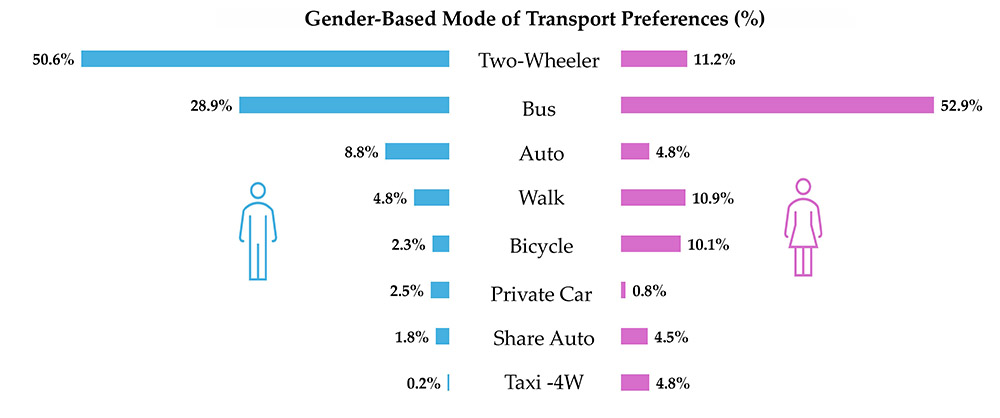
Figure 1: Mode of Commute – Gender Aggregated Preferences
Source: TERI
On-Ground Challenges: Accessibility, Safety, and Affordability
Despite relatively high public transport usage, commuters face multiple barriers across the travel chain. More than half of respondents rely on motorised modes for first and last-mile access, while 15% report that bus stops are located over a radius of more than one kilometre from their homes. Average waiting time for buses stands at around 16 minutes, reducing reliability for daily commuters.
Safety and inclusivity concerns are particularly acute. Nearly 70% of respondents cited poor pedestrian facilities, including the absence of safe crossings, signages, and continuous footpaths. Only 15 bus shelters meet universal accessibility standards, and inadequate street lighting affects night-time safety, especially for women, elderly persons, and persons with disabilities.
In this regard, discussions with stakeholders revealed a shared concern: while the intent to create safer and more inclusive streets exists, translating it into on-ground design remains a challenge. Limited technical capacity impedes efforts to map climate-vulnerable stretches, address missing road links, and develop a coherent NMT network for the city. There is a strong need for targeted design and planning support particularly for creating universally accessible footpaths with tactile paving and appropriate signages, and for integrating pedestrian safety measures, such as pelican crossings and signalised intersections. Strengthening technical capacity and institutionalising these measures is critical to delivering safer, more inclusive, and climate-responsive streets for all.
Affordability also remains a critical issue, around one-third of commuters spend 10-20% of their income on travel. One in four avoid trips altogether due to high transport costs. Additionally, low digital adoption, reflected in the limited willingness to use app-based mobility systems highlights the need for inclusive, accessible service models.
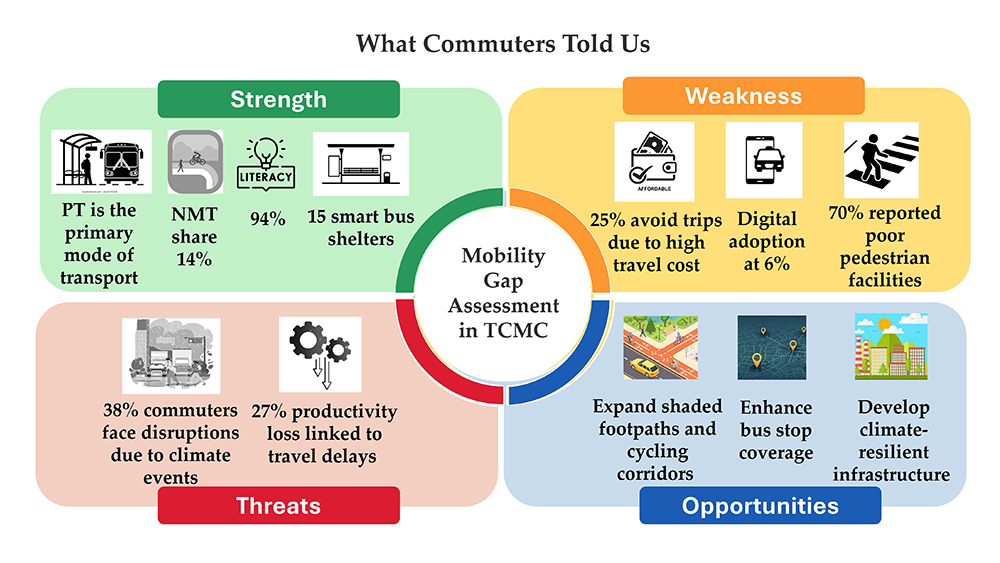
Figure 2: Commuter Perceptions – SWOT
Source: TERI
The commuter perception survey highlights that systematic barrier limits walkability in the city. Many people are reluctant to walk due to safety concerns arising from poor street lighting, high traffic volumes, and encroached or discontinuous footpaths. They expressed a clear need for continuous, well-connected pedestrian infrastructure and frequent, reliable public transport services, underscoring the importance of strengthening both walkability and service quality to improve everyday mobility.
Climate Risk and Mobility: Exposure and Vulnerability
Climate risk analysis reveals that existing mobility systems in Thoothukudi lack resilience to extreme weather events. Several neighbourhoods, including Matha Koil and Muthu Nagar function as “triple hazard zones,” where recurrent urban flooding, intense heat stress, and cyclonic impacts converge to disrupt travel and transport operations.
These climate stresses disproportionately affect vulnerable populations who depend on walking, cycling, and public transport for daily mobility. During extreme events, disruptions to transport networks translate directly into lost incomes, reduced access to essential services, and elevated safety risks particularly for women, informal workers, the elderly, and persons with disabilities. In the absence of systematic climate vulnerability mapping and its integration into transport planning, infrastructure design, and service operations, these impacts are likely to intensify in both frequency and severity over the coming decades.
Strategic Pathways: From Gaps to Action
The gap assessment points toward a set of interlinked strategic priorities for building climate-inclusive mobility in Thoothukudi.
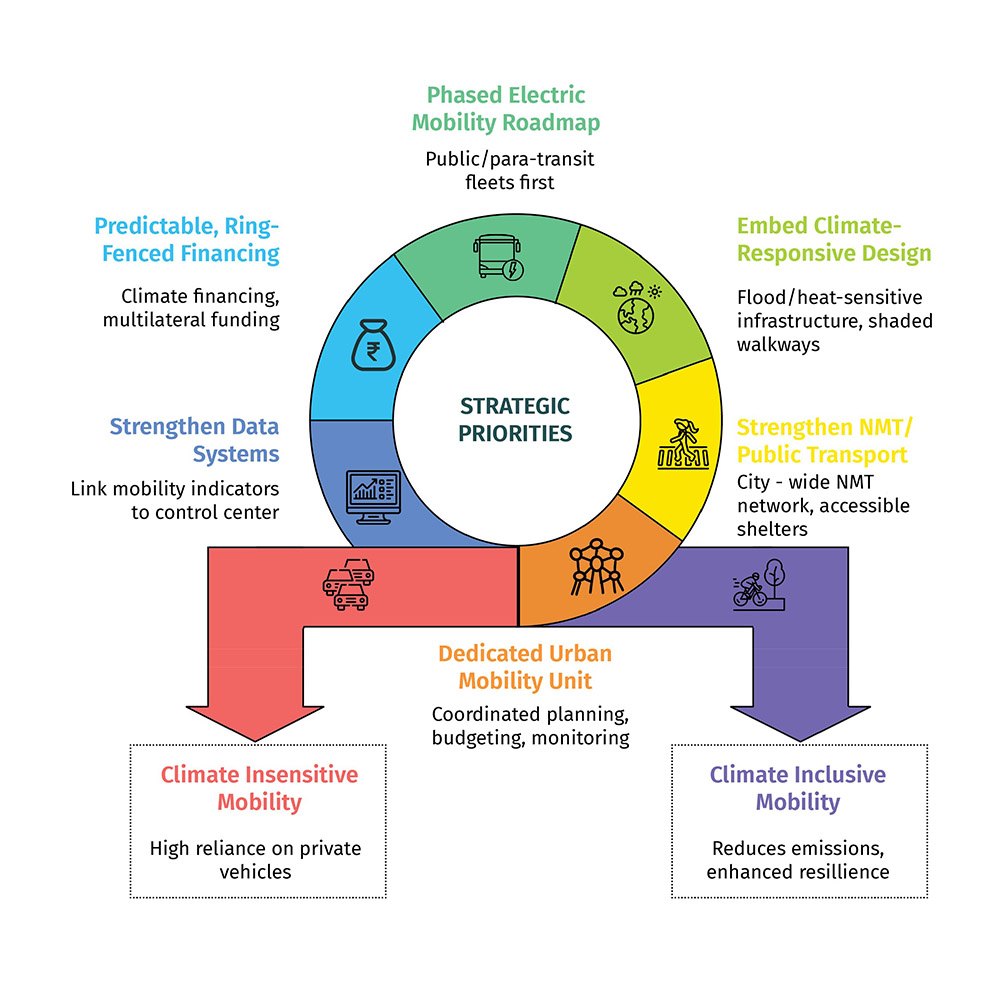
Figure 3: Strategic Priorities – Towards Climate Inclusive Mobility
Source: ITDP India
- Dedicated Urban Mobility Unit: At the institutional level, establishing a dedicated Urban Mobility Unit within the Municipal Corporation can provide a focal point for coordinated planning, budgeting, and monitoring across agencies. Leveraging existing statutory mechanisms, such as the District Road Safety Committee, can further support integrated decision-making without creating parallel structures.
- Implication: Stronger governance structures will move the city from project-based execution to long-term, system-level planning.
- NMT and Public Transport Infrastructure: Strengthening NMT and public transport infrastructure emerges as a high-impact intervention. City-wide NMT and Complete Streets network planning, universally accessible bus shelters, and improved feeder integration can drive mode shift away from private vehicles while enhancing resilience during extreme weather events.
- Implication: Investments in public and non-motorised transport deliver high returns—improving equity, safety, overall system efficiency and revenue gains through improved businesses and real estate.
- Climate-Responsive Infrastructure: Embedding climate-responsive design principles- including flood- and heat-sensitive infrastructure, shaded walkways, and route-level vulnerability mapping-can reduce service disruptions and long-term maintenance costs. A phased electric mobility roadmap, starting with public and para-transit fleets, offers opportunities to reduce tailpipe emissions and improve urban air quality.
- Implication: Climate-responsive infrastructure reduces long-term costs while strengthening resilience and service continuity.
- Dedicated Financing: Equally important is the creation of predictable, ring-fenced financing for mobility infrastructure, supported by climate finance, multilateral funding, and CSR partnerships. Strengthening data systems and linking mobility indicators to the city’s Integrated Command and Control Centre (ICCC) can enable evidence-based planning and performance monitoring.
- Implication: Moving away from ad-hoc/one-time, scheme-based funding ensures continuity and scalability of mobility investments.
Thoothukudi – A Lighthouse Opportunity for Tier-II Cities
Thoothukudi’s urbanisation trajectory reflects a broader shift underway across India’s Tier-II cities. As cities like Coimbatore, Madurai, Surat, Nagpur, and Visakhapatnam expand, mobility systems are under increasing pressure to evolve often outpacing the capacity of existing planning and governance frameworks. These challenges are systemic, interconnected and shape how people experience their city every day, whether urban mobility and planning feel safe, accessible, and dependable.
Within this context, Thoothukudi presents a critical opportunity. As a mid-sized, fast-growing port city, it offers the right scale to test solutions that are practical, adaptable, and grounded in local realities. Strengthening public transport, improving last-mile connectivity, prioritising walking and cycling, and embedding climate resilience into infrastructure can collectively move the city towards a more balanced and future-ready mobility system. The recommendations emerging from the gap assessment and stakeholder consultation study sets a strong foundation to guide and enable this transition.
Aligning Local Action with State Ambition
Playing a catalytic role, the gap assessment and stakeholder consultations, has helped build a robust evidence base, deepen institutional understanding, and identify priority actions towards climate-inclusive urban mobility planning. By supporting data-driven analysis and fostering cross-sectoral collaboration, the UK-PACT programme is accelerating early wins while demonstrating how targeted technical assistance can unlock scalable and replicable urban transformations.
It also aligns with Tamil Nadu’s broader development vision. The state has consistently positioned itself as a leader in sustainable urbanisation, climate action, and inclusive economic growth; Tamil Nadu has committed to achieving net-zero emissions well before 2070[6], supported by dedicated institutions like the Tamil Nadu Climate Change Mission and targeted climate financing. At the same time, it is strengthening data-driven planning through state-level climate-tracking systems that help guide policy and monitor progress.[7]
On the mobility front, the state is emerging as a major hub for electric mobility. It already accounts for a significant share of India’s EV manufacturing and continues to attract large-scale investments in the sector.[8] Alongside this, investments in urban infrastructure across Tier-II cities and district-level decarbonisation efforts[9] are also beginning to integrate mobility, energy, and resilience planning. Together, these efforts signal a clear direction: building cities that are not only economically competitive, but also low-carbon, inclusive, and resilient.
By advancing climate-inclusive and people-centric mobility through the programme, Thoothukudi can directly contribute to these state-level goals. It can support lower emissions, improve air quality, enhance accessibility for all groups, and strengthen resilience to climate risks—while continuing to drive economic growth through its port and industrial base. Thoothukudi can emerge as a true lighthouse city—demonstrating how Tier-II cities can move beyond fragmented improvements and align mobility, climate, and equity goals within a coherent and scalable framework.
This blog post is based on the report “Gap Assessment and Stakeholder Consultation”, which is expected to be published later this year under the UK PACT (Partnering for Accelerated Climate Transitions) Programme. The report forms part of the PACT-Digi-PULSE project (Partnering for Advancing Carbon-Neutral Transitions Using Digital‑Twin‑Based Planning for Urban Living and a Sustainable Environment) for the city of Thoothukudi.
Along with TERI (Sharif Qamar, Ruchika Mattoo, Anushree Harde, Arun Babu and Harshita Kaur), the primary contributors to the report include consortium partners from ITDP India (Sooraj E.M, Varsha Vasuhe and Priya Dharshini).
References
[1] District Statistical Handbook, 2022-23; Data available at https://cdn.s3waas.gov.in/s3019d385eb67632a7e958e23f24bd07d7/uploads/2024/01/2024010966-2.pdf
[2] District Statistical Handbook, 2022-23; Data available at https://cdn.s3waas.gov.in/s3019d385eb67632a7e958e23f24bd07d7/uploads/2024/01/2024010966-2.pdf
[3] Vahan data
[4] District Crime Record Bureau, Traffic Police, Thoothukudi
[5] Thoothukudi Master Plan, 2041
[6] Tamil Nadu Climate Change Mission, 2022 Retrieved from: https://environment.tn.gov.in/assets/report/CCM%20Document.pdf
[7] Government of Tamil Nadu, Climate Tracker. Retrieved from: https://tnclimatetracker.tn.gov.in/
[8] State Planning Commission, Government of Tamil Nadu, Electric Vehicles Policy 2023(Sectoral). Retrieved from: https://spc.tn.gov.in/policy/electric-vehicles-policy-2023
[9] Tamil Nadu takes the lead with Climate Action Tracker and District Decarbonization Plans to drive state-wide climate action Retrieved from:https://cms.tn.gov.in/cms_migrated/document/press_release/pr311025_e_2606.pdf
Partners
ITDP India and IITM