Headquarters
The Energy and Resources Institute (TERI)
Darbari Seth Block, Core 6C,
India Habitat Centre, Lodhi Road,
New Delhi - 110 003, India
The Musi River, the primary tributary of the Krishna River, originates in the Anantagiri Hills and flows into the Osmansagar and Himayatsagar reservoirs. Along its course, the river is joined by two rivulets, Esi (8 km) and Musa (13 km), which have historically served as vital water sources for Hyderabad for over a century.
One of the most significant events in the history of the Musi River was the catastrophic flood of September 28, 1908. This calamity devastated large parts of Hyderabad, particularly Kolsawadi and Ghansi Bazar in Afzal Gunj, destroying over 80,000 homes and rendering a quarter of the population homeless. The disaster also claimed approximately 15,000 lives and caused widespread destruction, including the collapse of key bridges and the Nizam Hospital. In response, Mokshagundam Visvesvarayya designed a robust flood control system that led to the construction of the Osmansagar and Himayatsagar reservoirs, serving both flood protection and water supply needs.
Over time, Hyderabad has transformed into a thriving metropolitan city, characterised by rapid urbanization, high population density, and complex socio-economic dynamics. However, unchecked development has significantly altered the natural landscape. The construction over natural rainwater channels and water tanks, coupled with changes in land use and land cover, has disrupted rainwater flow, exacerbating urban challenges such as flooding, storms, and heatwaves. These pose serious threats to urban infrastructure, public health, and socio-economic stability.
To address these challenges, the Government of Telangana, with support from the World Bank, has initiated a program focused on sustainable urbanization, innovative urban design, low-carbon solutions, climate adaptability, and efficient resource use. TERI is spearheading this study on behalf of the World Bank to provide technical assistance to the Government of Telangana for the development of the Musi Riverfront.
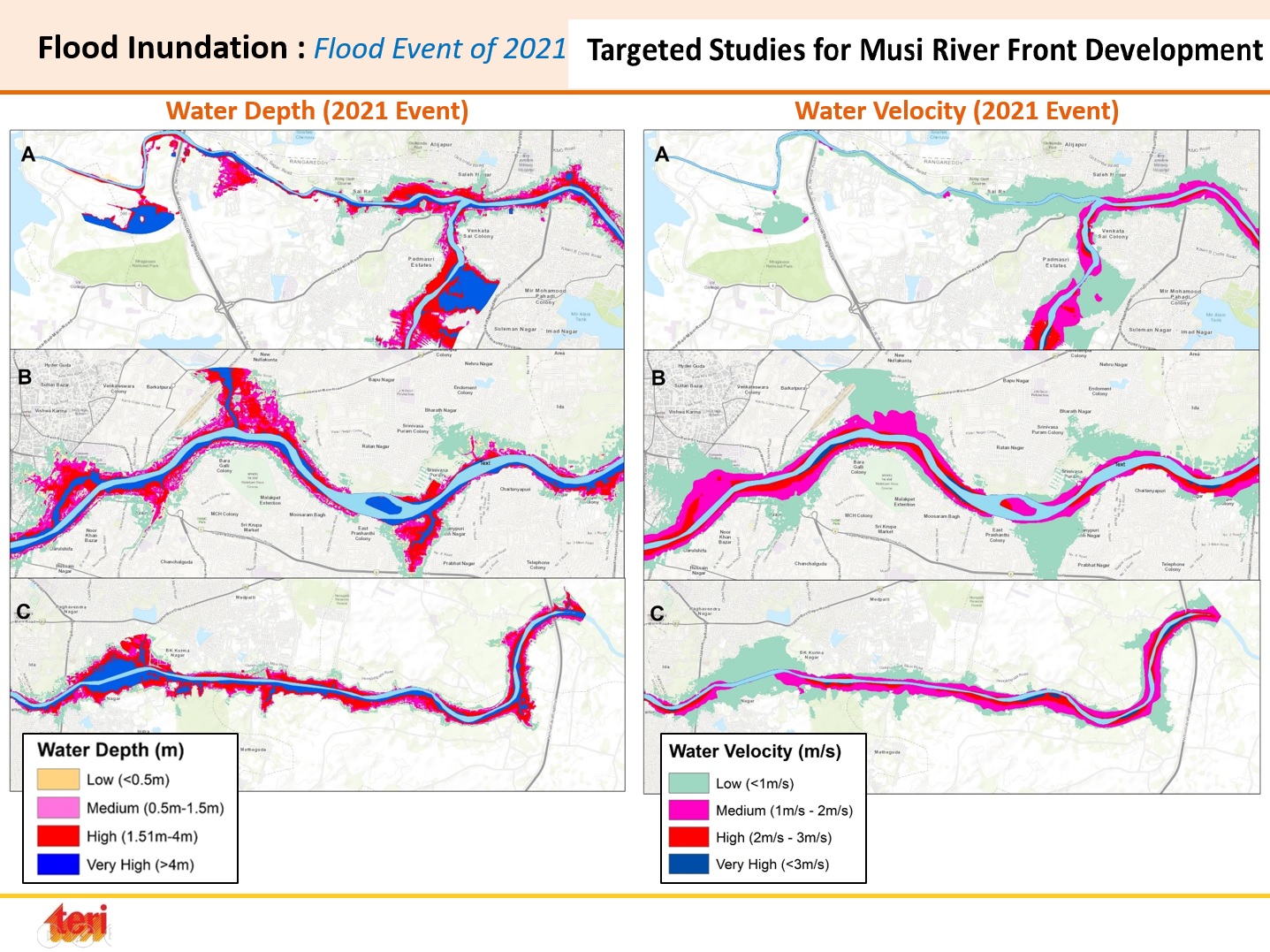
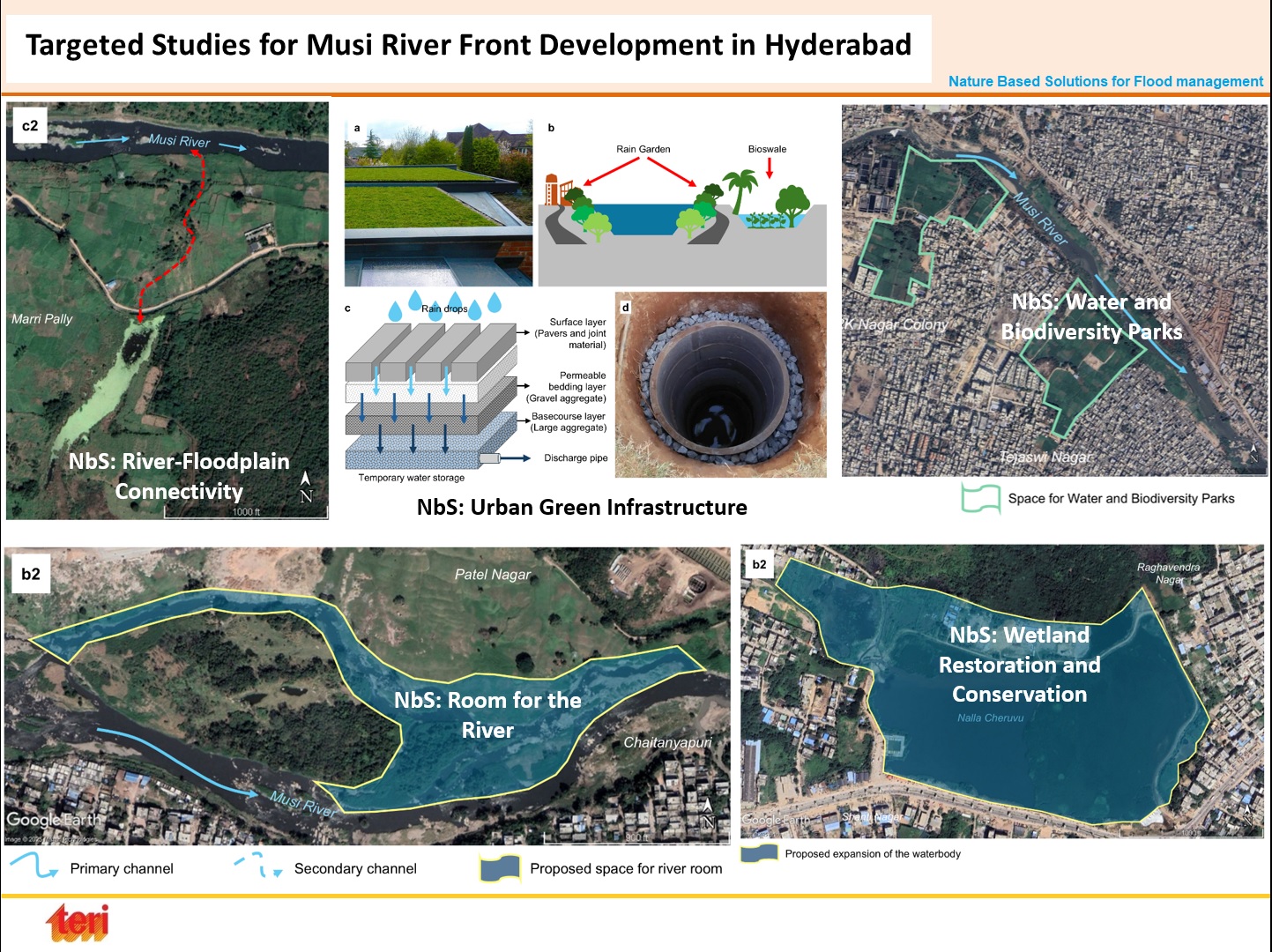
TERI’s efforts focus on providing technical support to the Musi Riverfront Development Corporation Limited (MRDCL) to implement comprehensive riverfront development strategies and enhance flood resilience. This initiative aims to mitigate risks, restore the Musi River ecosystem, and promote sustainable urban growth.
The project seeks to develop actionable recommendations and investment options for the sustainable redevelopment of the Musi River corridor and the broader Hyderabad Metropolitan Area. The tasks include:
By integrating resilience-building measures with urban sustainability goals, the project aims to transform the Musi River corridor into a model of sustainable urban development, fostering a resilient and vibrant future for Hyderabad.