
Headquarters
The Energy and Resources Institute (TERI)
Darbari Seth Block, Core 6C,
India Habitat Centre, Lodhi Road,
New Delhi - 110 003, India
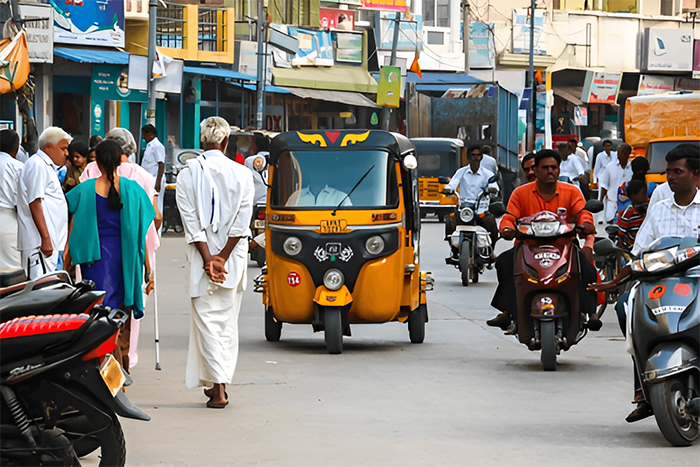
The Energy and Resources Institute (TERI), in partnership with the Andhra Pradesh Pollution Control Board (APPCB), Greater Visakhapatnam Municipal Corporation (GVMC), Vijayawada Municipal Corporation (VMC), and other local stakeholders, is implementing an initiative to plan and develop Clean Air Zones (CAZs) in Visakhapatnam and Vijayawada under the National Clean Air Programme (NCAP).
These cities are among the thirteen non-attainment cities in Andhra Pradesh, where air quality does not meet national standards. Traffic emissions are a major contributor to air pollution in both Visakhapatnam and Vijayawada, posing significant health risks to residents. Through this project, TERI is working closely with city authorities to identify traffic pollution hotspots, design evidence-based interventions, and pilot measures to reduce emissions in selected CAZs.
The approach combines scientific assessments, stakeholder engagement, and targeted action to reduce local exposure to traffic-related air pollution. The strategies developed here will serve as a replicable framework for other Indian cities facing similar challenges, enabling the scaling up of effective air quality interventions nationwide.
Key partners, including the APPCB, Transport Department, Municipal Corporations, and Traffic Police, are collaborating to ensure that CAZs are effectively implemented, sustained, and integrated into broader clean air action plans. This coordinated effort is paving the way for cleaner, healthier, and more liveable urban environments in Andhra Pradesh and beyond
The project has identified two pilot zones for Clean Air Zone implementation planning:
The project will deliver a comprehensive Clean Air Zone (CAZ) framework for Visakhapatnam and Vijayawada, supported by robust scientific evidence and actionable strategies. Key outputs include:
Replicable Methodology Toolkit enabling other non-attainment cities to adopt similar data-driven planning for traffic emission reduction.