Headquarters
The Energy and Resources Institute (TERI)
Darbari Seth Block, Core 6C,
India Habitat Centre, Lodhi Road,
New Delhi - 110 003, India
The Challenge: Urban Strain and Waste Accumulation
Ayodhya is currently experiencing significant strain on its urban infrastructure due to rapid urbanization and a growing population, resulting in a substantial surge in solid waste generation. While door-to-door collection systems are in place, a historical lack of source segregation and specialized processing facilities has led to the dumping of mixed waste at unlined disposal sites. This practice triggers the uncontrolled release of potent greenhouse gases (GHG), posing long-term risks to both public health and the local environment.
The Intervention: Material Recovery and Biogas Technology
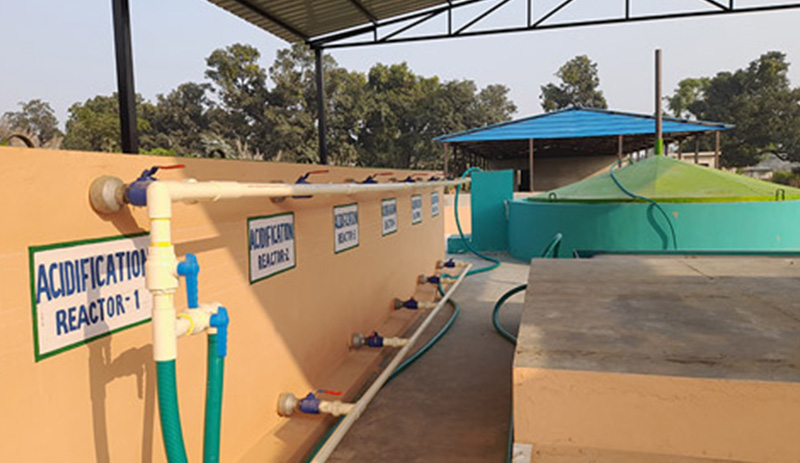
To address these systemic challenges, The Energy and Resources Institute (TERI), New Delhi, entered into a Memorandum of Understanding (MoU) with the Ayodhya Municipal Corporation (AMC). This partnership focuses on commissioning two critical facilities designed to modernize the city’s waste value chain:
By diverting dry waste for recycling and treating organic matter through anaerobic digestion, this initiative directly mitigates GHG emissions from Ayodhya’s waste sector.
Capacity Building and Stakeholder Engagement
A cornerstone of this project is raising awareness of the climate impacts associated with traditional waste disposal. To ensure the long-term sustainability and scalability of these interventions, TERI has developed specialized capacity-building modules.
These modules target a diverse group of stakeholders, including the Municipal Corporation, the State Urban Development Department, the State Pollution Control Board, Resident Welfare Associations (RWAs), NGOs, and community-based organizations. Through this targeted training, local actors are equipped with the expertise to manage pilot facilities effectively and scale these emission-mitigation strategies across the entire city.