
Headquarters
The Energy and Resources Institute (TERI)
Darbari Seth Block, Core 6C,
India Habitat Centre, Lodhi Road,
New Delhi - 110 003, India
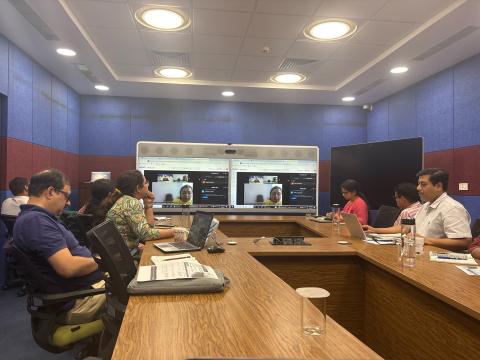
Experts discuss how soil microbial communities, plant–microbe interactions and genomic insights can strengthen carbon sequestration and sustainable agricultural systems
New Delhi, 30 September 2026: The Energy and Resources Institute (TERI) hosted a webinar titled ‘Understanding Underground Genomes that Influence Carbon Sequestration in Agriculture’ as part of the TERI Research Frontiers: Science, Technology & Innovation for Sustainability – Webinar Series 2026–27. The session brought together experts to examine the science beneath agricultural soils and explore how soil microbiomes, microbial communities and plant–microbe interactions can contribute to carbon sequestration and climate-smart agriculture.
Organised by TERI’s Sustainable Agriculture Programme and the Centre for Nanotechnology Research and Agricultural Biotechnology, the webinar focused on the growing importance of understanding the biological processes occurring belowground and their implications for building healthy soils, resilient food systems and sustainable agricultural practices.
In her opening remarks, Dr Pushplata Singh, Senior Fellow and Director, Centre for Nano Research Area and Agricultural Biotechnology, TERI, set the context for the webinar, highlighting TERI’s vision for sustainable agriculture and the importance of scientific research and innovation in understanding soil–plant–microbe interactions.
On TERI’s sustainable agriculture vision, the importance of soil health and the need to better understand belowground biological processes for climate-resilient agriculture, Dr Pushplata Singh emphasized that “Healthy soils are central to sustainable agriculture. Understanding the interactions between plants and microorganisms belowground can help us strengthen soil health and develop agricultural practices that support carbon storage and resilience.”
The first technical session featured Dr Arjun Singh, Scientist (SS), Agricultural Microbiology, ICAR–Central Institute for Subtropical Horticulture, Regional Research Station, Lucknow, who spoke on ‘Decoding the Soil Microbiome: Genomes, Microbial Guilds and Carbon Sequestration’. His presentation examined the role of microbial communities and their genomic characteristics in influencing soil functions and carbon dynamics.
Dr Arjun Singh said, “Genomic tools can help us understand which microbial groups carry out carbon transformations in soil. Combining sequencing and network analysis with experimental validation is essential for translating these insights into better soil management.
The second invited talk was delivered by Dr Sudeshna Bhattacharyya, Senior Scientist, Division of Soil Biology, ICAR–Indian Institute of Soil Science, Bhopal, on ‘Soil Microbial Communities as Drivers of Carbon Sequestration’. The session highlighted the role of soil microbial communities in driving processes associated with carbon storage and the broader functioning of agricultural soils.
On microbial communities, soil carbon sequestration and the importance of integrating soil biological processes into sustainable agricultural practices, Dr Sudeshna Bhattacharyya highlighted “Soil microorganisms influence whether plant carbon is released back to the atmosphere or retained in soil. Their growth efficiency, residues and interactions with soil minerals and aggregates are central to carbon storage. Biological indicators should therefore be assessed alongside soil carbon stocks.”
The technical presentations were followed by an interactive session involving the speakers and participants, facilitating discussion around soil microbiomes, carbon sequestration and pathways towards climate-smart agriculture. The discussions underscored the importance of strengthening scientific understanding of soil biological systems and translating research insights into approaches that can support sustainable and resilient agricultural systems.
Dr Pratima Vasistha, Research Associate, TERI, delivered the vote of thanks, acknowledging the speakers and participants for their contributions to the discussion.
The webinar is part of TERI’s Research Frontiers series, which seeks to bring together researchers, scientists and practitioners to discuss emerging science, technology and innovation for sustainability. The 2026–27 series focuses on research themes relevant to building a more sustainable and resilient future.