Headquarters
The Energy and Resources Institute (TERI)
Darbari Seth Block, Core 6C,
India Habitat Centre, Lodhi Road,
New Delhi - 110 003, India
New paper finds an energy “regime complex” with overlapping membership, divided constituencies and no single body with a system-wide mandate; proposes emergency arrangements that cover gas as well as oil, and an inclusive framework for critical minerals
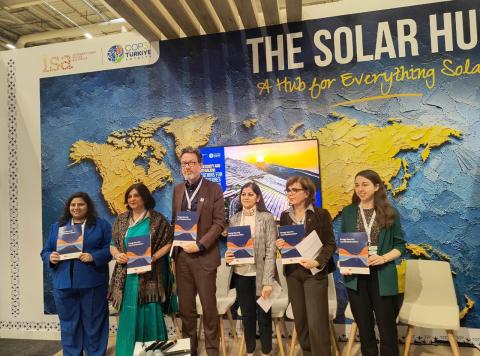
Antalya, 17 November 2026: The Energy and Resources Institute (TERI) today launched its advance publication, Energy Security and Multilateralism, at the Solar Hub (ISA Pavilion) in the Blue Zone at COP31. The launch opened a high-level session on Energy Security and Multilateralism: Implications for Energy Futures, organised with the International Solar Alliance (ISA). It brought together leaders from the ISA, the International Energy Agency (IEA), the International Renewable Energy Agency (IRENA) and Climate Analytics.
The session took place after a year of severe energy disruption. The closure of the Strait of Hormuz on 28 February 2026 was the sixth major oil price shock since 1973. Brent crude rose from about US$64 per barrel to US$120 in April, and gas prices in Europe and Asia also climbed sharply. The shock showed how geopolitical conflict can spread across interconnected markets and hit importing and exporting economies alike.
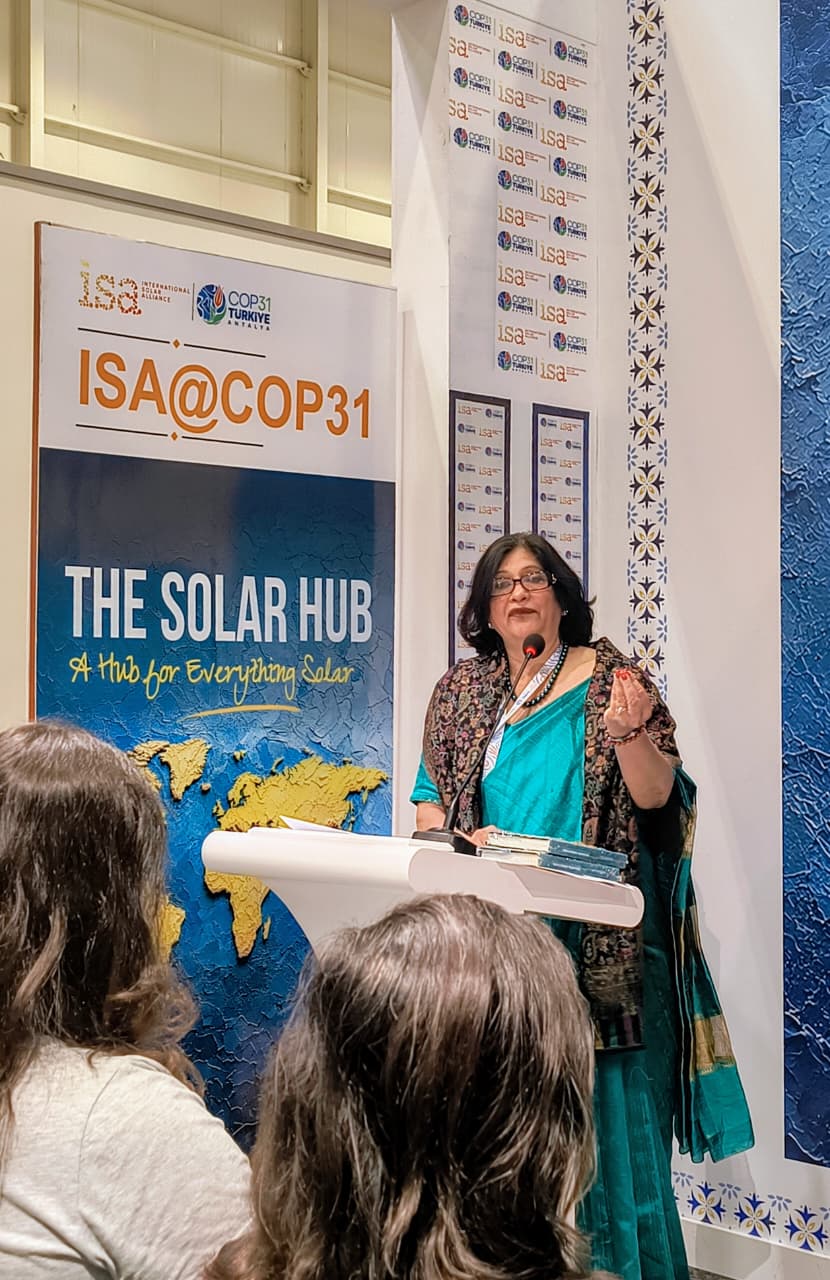
On why energy security and multilateral reform matter for climate action; TERI’s role in bringing evidence from the Global South to COP31, Dr Vibha Dhawan, Director General, TERI said in her Keynote Address, “In India, when we talk of energy transition, we talk of just transition, because it is important that no one is left behind. You have to take care of your kitchen as much as you are ensuring that energy is available for industrialization. For smaller, developing countries, the task is much tougher than it is for the developed part of the world. Trade routes, infrastructure and supply chains link countries so closely that no country can manage these risks on its own. Global energy governance has no single authority. It is like pearls in a necklace: each pearl has to be tied to the other properly.”
What the paper finds
Authored by Shailly Kedia, Pujeet Jha and Manjot Kaur of TERI, the paper assesses 14 international organisations and mechanisms on three dimensions: their functions, their country membership and their documented relationships with one another. Its main findings:
Dr Shailly Kedia, Senior Fellow, TERI, lead author and session moderator remarked, “We are here today to examine how the energy security landscape is evolving, especially with respect to clean energy transitions, including solar energy. One of the central aspects we will be discussing is whether existing multilateral institutions are equipped to address emerging vulnerabilities and global interdependencies, to contribute to sustainable energy futures through climate action.”
The paper recommends that energy multilateralism be strengthened without necessarily adding another overarching organisation. Its proposals include:
1. Clear responsibilities for under-represented areas. Hydropower, hydrogen, road transport and buildings lack a dedicated intergovernmental mandate.
2. A universal, country-based coordination platform. It would carry out periodic reviews of systemic risks and of implementation across existing bodies. The paper raises the possibility of a universal energy agency within the UN framework that could coordinate across energy system components.
3. Stronger links between energy agencies and sectoral bodies. There can be strengthened coordination among ICAO, IMO and UNIDO on fuels and industrial transitions, and FAO and WHO on agrifood energy, clean cooking and health-facility electricity.
4. Emergency coordination beyond current IEA membership and beyond oil. Major non-member importers, producers and transit countries would take part in preparedness, and gas and LNG would be covered. Plans would protect essential services and low-income households, so that crisis management supports affordability as well as continuity of supply.
5. An inclusive intergovernmental framework for critical minerals. It would link producing, processing and consuming countries and let resource-rich developing countries help set priorities and capture domestic value addition.
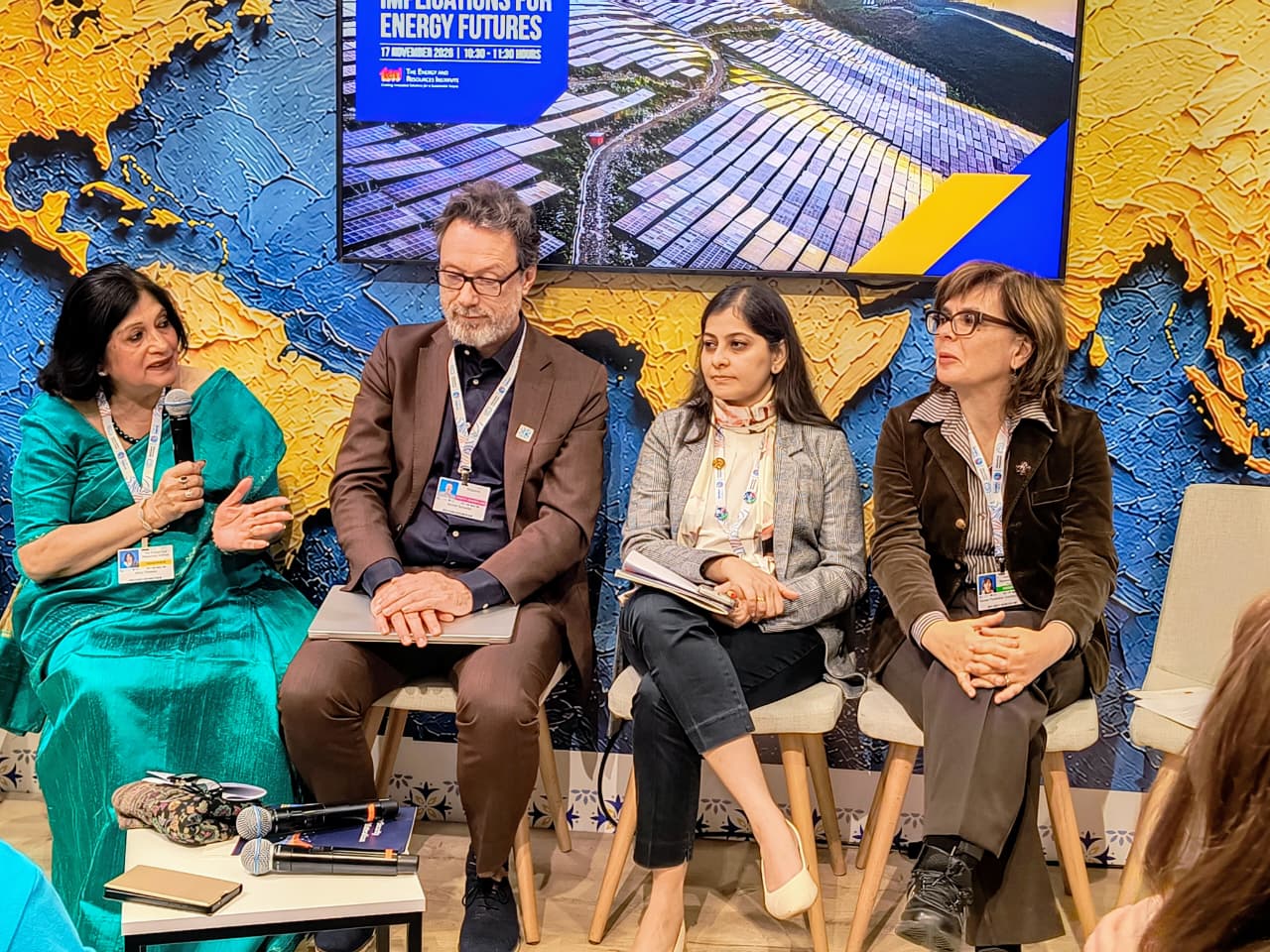
The panel discussion, moderated by Dr Shailly Kedia, addressed three questions: how countries can strengthen energy security and resilience while balancing affordability, diversification and climate goals; how multilateral institutions can improve coordination and the representation of the Global South; and how solar energy and international partnerships, can advance energy security and an equitable transition. The panelists were: Ms Namrata Mukherjee, Strategic Planning Specialist, International Solar Alliance, Ms Sophie Westlake, Senior Advisor, Multilateral Strategy, International Energy Agency, Ms Norela Constantinescu, Deputy Director, IRENA Innovation and Technology Center, and Prof. Michiel Schaeffer, Chief Scientist and Co-founder, Climate Analytics.
The full report can be accessed here: https://www.teriin.org/event/cop-31-side-event-energy-security-and-multilateralism-implications-energy-futures.
To know more about other events, follow TERI@COP31.