
Headquarters
The Energy and Resources Institute (TERI)
Darbari Seth Block, Core 6C,
India Habitat Centre, Lodhi Road,
New Delhi - 110 003, India
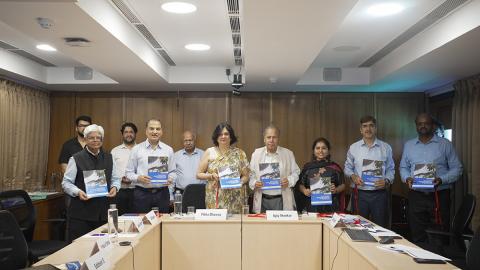
Policy brief presents actionable recommendations to mainstream solar thermal technologies across Indian industries and accelerate low-carbon manufacturing.
New Delhi, July 10, 2026: The Energy and Resources Institute (TERI) today released its Policy Brief on Solar Thermal Energy for Industrial Decarbonization, highlighting the significant potential of solar thermal technologies to reduce fossil fuel dependence and support India’s transition toward a low-carbon industrial economy.
The policy brief was launched during a hybrid event held at TERI in New Delhi, bringing together experts, policymakers, industry stakeholders, and researchers to deliberate on strategies for mainstreaming solar thermal technologies across industrial applications.
Delivering the opening address, Dr Vibha Dhawan, Director General, TERI, highlighted the objective of the policy brief and why the study was undertaken, and said, “India's net-zero transition depends on empowering SMEs to overcome financial and technological barriers through affordable capital, proven pilot projects, and market-driven ESG incentives for clean process heat.”
Presenting the findings of the policy brief, Mr Ajay Shankar, Distinguished Fellow, TERI, along with Ms Urvashi Singh, Research Associate, TERI, and Dr N K Ram, Senior Fellow, TERI, outlined the study’s analysis and policy recommendations.
The discussions that followed focused on the opportunities and challenges associated with scaling solar thermal technologies in Indian industry, including policy support, financing mechanisms, technology adoption, and industry preparedness.
Concluding the programme, Mr AK Saxena, Senior Director, TERI, thanked the participants and reiterated the importance of collaborative efforts among government, industry, research institutions, and financial stakeholders in advancing industrial decarbonization.
The policy brief is expected to contribute to ongoing policy discussions on industrial decarbonization and support informed decision-making for accelerating the deployment of clean thermal energy solutions in India.