
Headquarters
The Energy and Resources Institute (TERI)
Darbari Seth Block, Core 6C,
India Habitat Centre, Lodhi Road,
New Delhi - 110 003, India
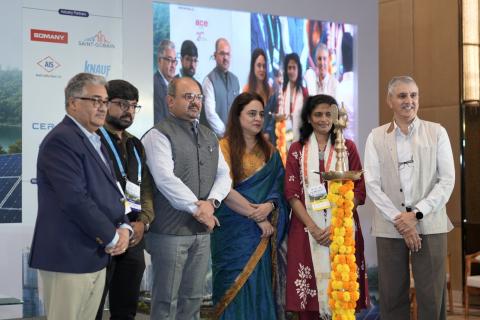
Pune, 30 September 2026: GRIHA Council hosted the GRIHA Regional Conclave Pune 2026 on Wednesday, 30 September 2026, at Hotel Conrad, Pune, under the theme ‘Pathways for a Low-Carbon Future: Building to Infrastructure’. The conclave brought together key stakeholders from government, industry, academia, and the built environment sector to deliberate on actionable pathways for sustainable urban growth, climate resilience, and low-carbon development in the region.
The conclave commenced with a fireside chat titled “India’s Environmental Policy, Legislation and Achieving Low-Carbon Outcomes”, moderated by Shri Sanjay Seth, Vice President & Chief Executive Officer, GRIHA Council, and Executive Director – Strategy & Partnerships, TERI, New Delhi. The session featured expert perspectives from Dr Prasad Modak, Managing Director, Environmental Management Centre Pvt. Ltd., and Ar. Anagha Paranjape-Purohit, Director, VK, Sustainability Initiatives Trustee.
Inaugural Address: Mr Shravan Hardikar, IAS, Managing Director, Maharashtra Metro Rail Corporation Limited, Government of Maharashtra, said, “The biggest challenge to our efforts in advancing a sustainable future is the belief that someone else will take action. The time for incentivising green construction has passed; we must now move from incentives to enforcement. We have no time to lose, and it is imperative that we act collectively and decisively to accelerate sustainable development.”
Keynote Address: Prof Sunil S. Bhagwat, Director, Indian Institute of Science Education and Research (IISER) Pune, said, “Sustainability, together with economics, is the target rather than any one of those things alone.” He also highlighted India’s potential to lead in sustainable development through its traditional practices and resource-conscious mindset.
Welcome Address: Shri Sanjay Seth, Vice President & Chief Executive Officer, GRIHA Council, and Executive Director – Strategy & Partnerships, TERI, New Delhi, said, “It is our collective responsibility to accelerate the decarbonisation of the built environment and create sustainable, resilient and resource-efficient buildings and infrastructure for the future.”
A technical plenary session, “Scaling Sustainability: From Green Buildings to Resilient Cities and Infrastructure”, was moderated by Smt Shabnam Bassi. The session brought together architects, consultants, and government officials from the buildings and infrastructure sectors to share insights, identify implementation gaps, and discuss strategic approaches to accelerating the transition towards a low-carbon future for resilient cities and infrastructure.
On the occasion, GRIHA Council signed Memoranda of Understanding (MoUs) with Vishwakarma University and Dr D. Y. Patil Deemed to be University, School of Architecture, Navi Mumbai, focusing on sustainability education, capacity building, and applied research. Through these collaborations, the institutions intend to advance research and awareness of sustainable practices in the built environment.
During the conclave, GRIHA Council also released the Marathi translation of the GRIHA publication, Sustainability Guidelines for Design Implementation, Construction Management and Operation and Maintenance, to enhance local outreach and awareness.
Another publication, by Sustainability Initiatives, the Knowledge Partner of the GRIHA Regional Conclave, was also released. The sixth edition of Sustainability Initiatives’ flagship publication, SI Imprint – EARTHFLUENCERS, celebrates individuals, organisations, technologies, and movements shaping a sustainable future. GRIHA Council also felicitated GRIHA-rated projects and PM SHRI Navodaya Vidyalaya Schools (NVS) in Maharashtra under various GRIHA rating frameworks.
The day concluded with a round-table session on “Moving Towards Low-Carbon Transition: Business Strategy, Climate Finance and Building Stakeholder Capacity to Derive Carbon Value”. The discussion focused on how business leadership, green finance, sustainable buildings, and emerging carbon markets can accelerate the transition towards a low-carbon built environment. Experts from government, industry, academia, and civil society deliberated on the need to make sustainability a core business imperative for the green transition.