Headquarters
The Energy and Resources Institute (TERI)
Darbari Seth Block, Core 6C,
India Habitat Centre, Lodhi Road,
New Delhi - 110 003, India
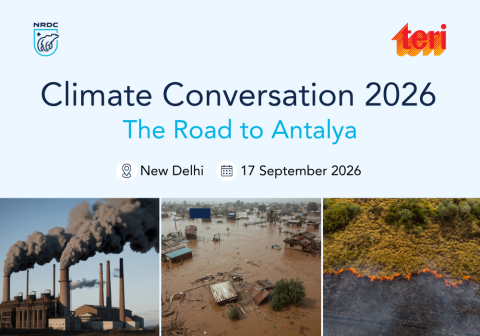
New Delhi roundtable brings together policymakers, diplomats, and experts ahead of COP31 in Antalya, Turkey (9–20 November 2026)
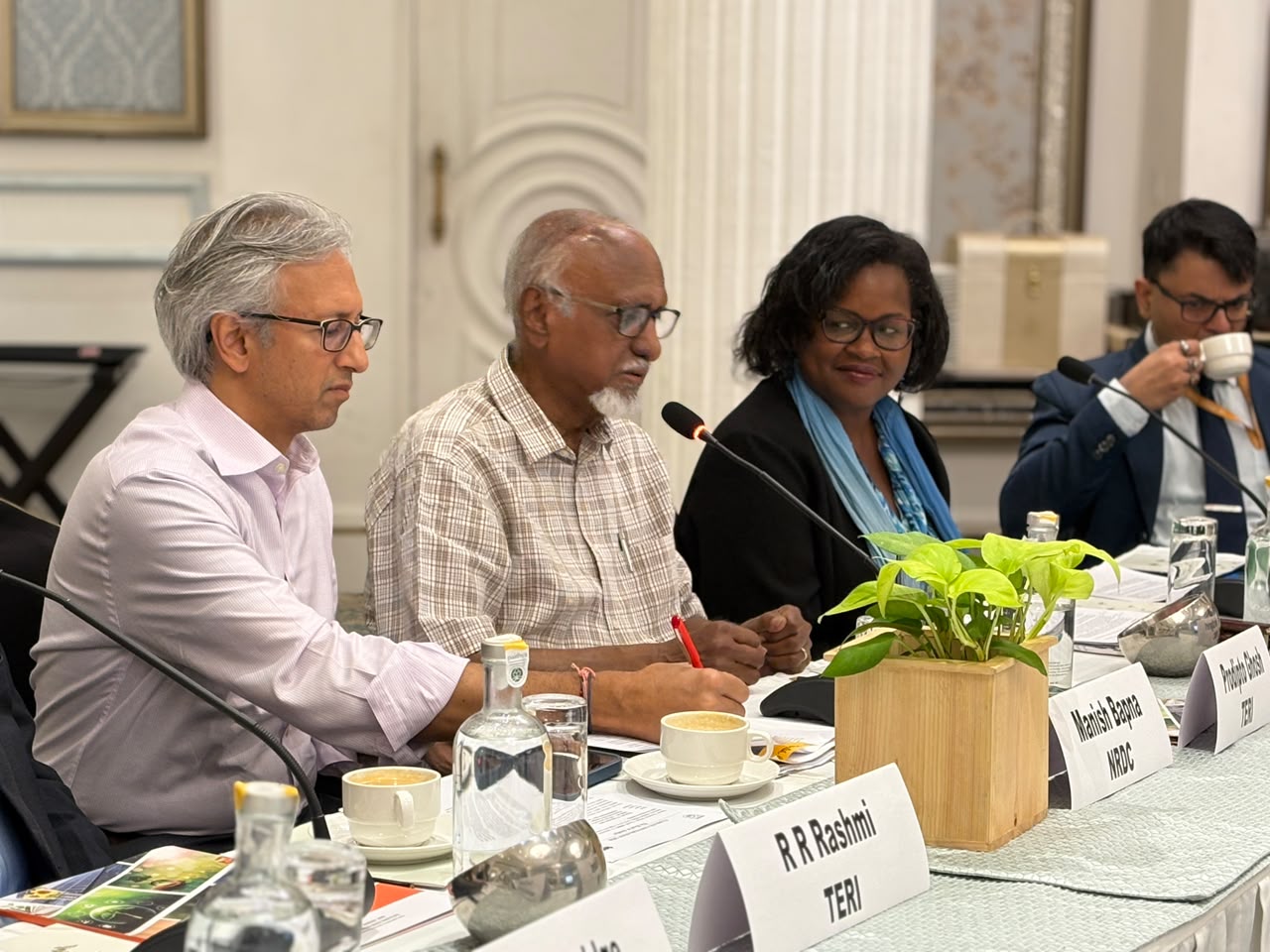
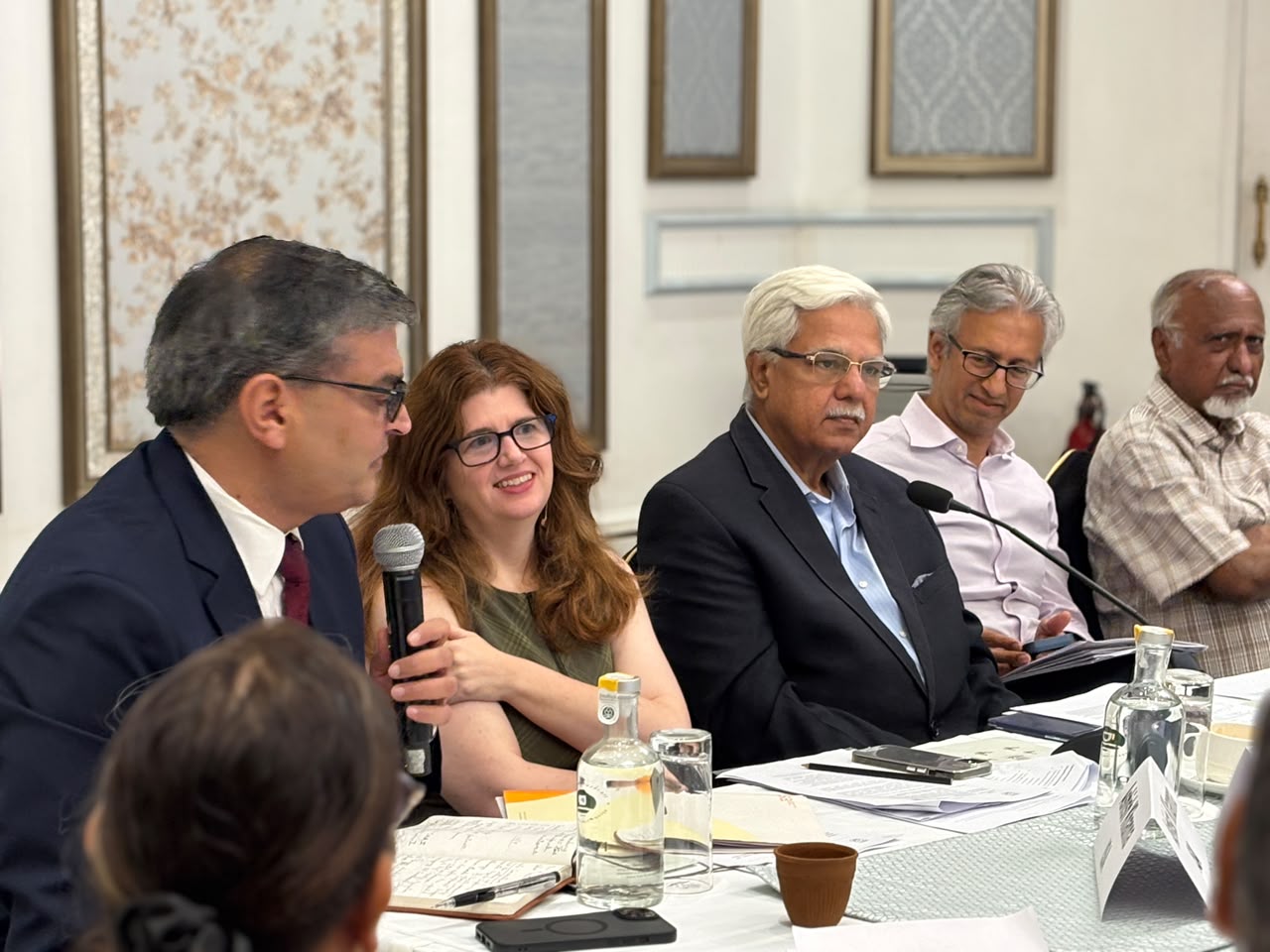
New Delhi, 17 September 2026: The Natural Resources Defense Council (NRDC) and The Energy and Resources Institute (TERI) today convened ‘Climate Conversation 2026: The Road to Antalya’, a high-level roundtable examining the implications of a shifting geopolitical landscape for global climate ambition from India’s perspective, and what it means for India's clean energy transition and its role in multilateral climate negotiations.
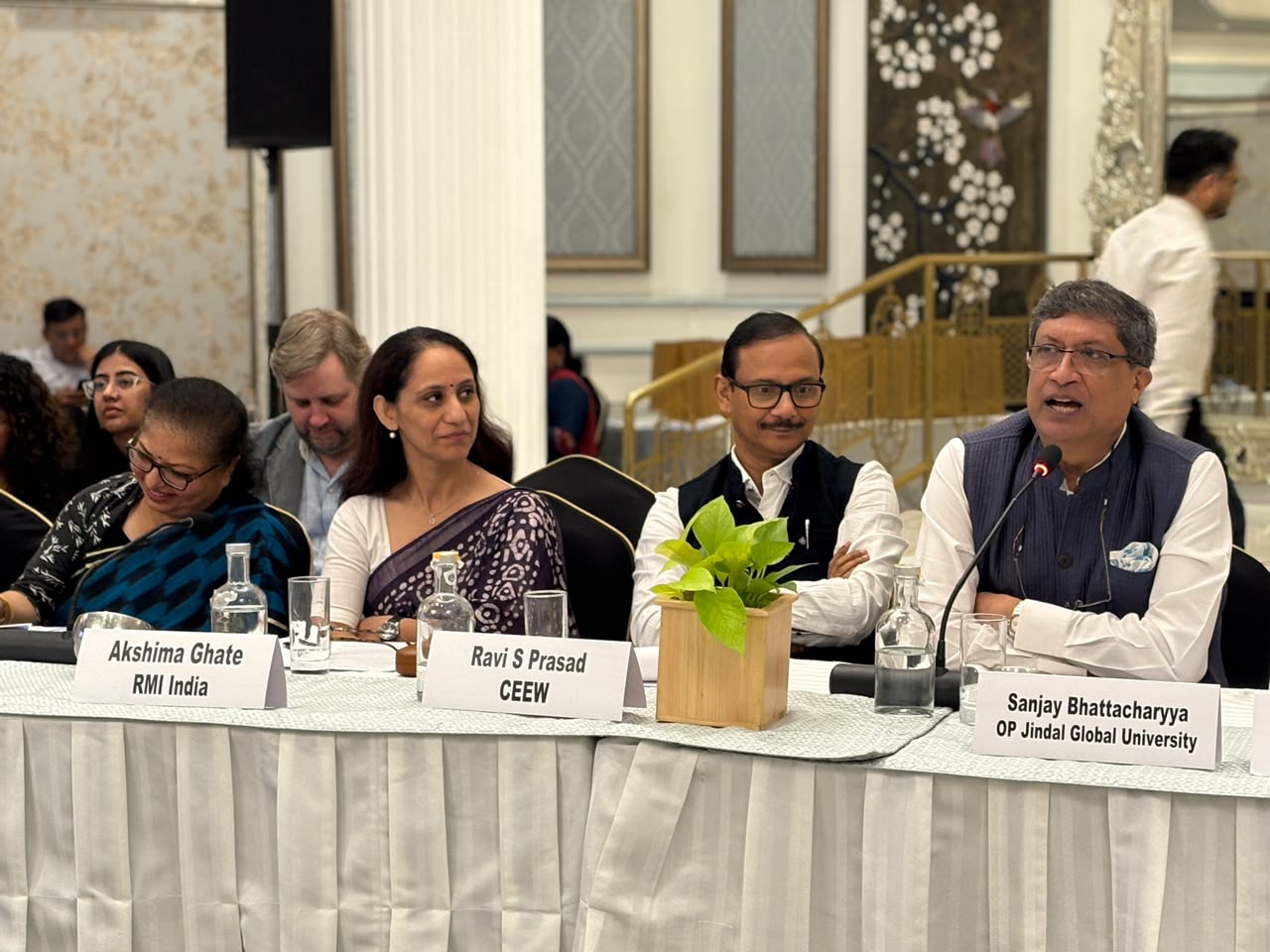
Held at The Claridges, New Delhi, the half-day dialogue brought together senior officials from key Government of India ministries, members of the diplomatic community, and leading voices from research institutions, industry bodies, international organizations, and civil society.
The roundtable took place ahead of COP31, the 31st UN Climate Change Conference, to be held in Antalya, Turkey, from 9–20 November 2026. The COP31 Presidency has framed COP31 as a turning point for climate action — a shift from pledges on paper to verified, measurable delivery on the ground. That framing resonates at a moment marked by escalating conflicts, rolled-back global commitments, strained multilateralism, disrupted energy supply chains, and warnings that the world is likely to cross the 1.5°C threshold within the next few years.
The participants shared their views on diverse issues, including challenges and opportunities arising from the geopolitical turmoil; the proposed global electrification target of 35% by 2035 and the future of energy security; the jurisdictional intricacies of unilateral trade measures such as CBAM; consumption-based GHG emissions accounting; and the global goal of adaptation. The underlying implementation challenges related to technology, supply chain, carbon markets, mobilization and delivery of international private finance, the role of public finance, and diplomatic efforts to build trust and credible institutional mechanisms were also deliberated upon. Some of the key ideas emerging from the discussions include the following:
Recognizing the multiple geopolitical stresses on multilateralism, and the main task before COP31 being building trust among parties for implementation, the participants shared the view that this is also an opportunity to build a new multilateral framework for a multipolar world, one that reflects the aspirations of the developing world, and also supports a technological agenda to address the challenges of sustainable development. In the specific context of climate change, new mechanisms for experience sharing and adaptation services are needed to give adaptation and Loss & Damage issues their due importance, given the increasing frequency of extreme events across continents that affect both developed and developing countries.
While the geopolitics of a green transition is overshadowed by the USA’s non-cooperation compared to a decade ago, the market for green technologies is now more evolved and dynamic, especially in renewable energy and the electric vehicle (EV) sector. The global agenda, however, needs to focus on implementing on-the-ground projects that strengthen institutions and technical capacities in developing and least developed countries. Without accompanying pathways for institutional capacity and financial mobilization, the proposed target of meeting 35% of energy demand with electricity by 2035 would be inadequate.
The participants recognized that the binding obligations of developed countries regarding finance and technology have been diluted over the three decades of negotiations. For the COPs of the implementation phase, after setting the New Collective Quantified Goal on climate finance (NCQG) of USD 300 billion per year by 2035 and USD 1.3 trillion overall, despite its inadequacy, it is important to agree on a definitive implementation strategy. This may include establishing a global risk-reduction facility for private finance and a dedicated bank for the energy transition. Making finance integral to other implementation tracks, such as the GGA and the Just Transition Work Program, is equally important.
Reflecting on the unilateral measures like the Carbon Border Adjustment Mechanism (CBAM) by the EU and other countries, the participants noted a pattern of developing countries creating parallel initiatives of unilateral measures which amount to subversion of the principle of equity and common but differentiated responsibilities, as such measures shift the negotiation agenda from ‘what developed countries owe’ to ‘what developing countries should comply with’. The discussion also considered proposing a global CBAM based on per-capita consumption-based emissions accounting.
So far, COPs have focused on broad normative architecture and global quantitative goals. The achievement of these goals will depend on sectoral strategies in local contexts. For example, electrification targets need to spell out financing for MSMEs to green their heating and for building transmission networks. Financial flows for sectoral actions at the sub-national level are key to implementation.
Despite progress in institutional architecture for carbon markets, the predictability of financial flows from market proceeds is unclear. Integration with and access to established carbon markets, such as the EU-ETS, are necessary for carbon markets to deliver benefits for developing countries. We need to create a dedicated window for financial transfers, like the share of proceeds from the Clean Development Mechanism that goes to the Adaptation Fund.
The roundtable participants included representatives from the Ministry of Environment, Forest, and Climate Change, the Australian High Commission, British High Commission, International Solar Alliance, RMI, CEEW, CSE, OP Jindal Global University, CSEP, CRF, CSI, CSTEP, The Climate Group, SFC, CPI, IORA Ecological Solutions, Ashoka University, and many former climate negotiators along with senior colleagues from NRDC and TERI.