Headquarters
The Energy and Resources Institute (TERI)
Darbari Seth Block, Core 6C,
India Habitat Centre, Lodhi Road,
New Delhi - 110 003, India
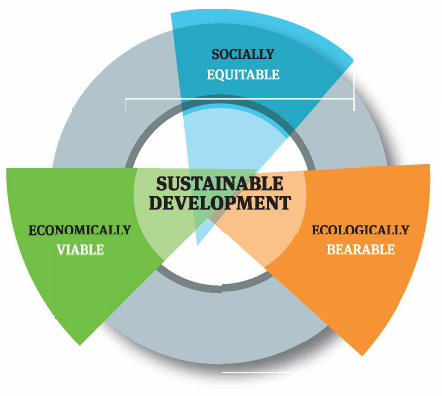
Sustainable development has been defined as "development that meets the needs of the present without compromising the ability of future generations to meet their own needs". One of the enablers for sustainable development is 'education' as it empowers people to make sustainable choices for a better tomorrow. Of the 17 Sustainable Development Goals (SDGs) adopted by the global community, quality education is ranked fourth - and is considered instrumental for achieving the success of all other 17 SDGs.
Amidst all the environmental mayhem and its far reaching impacts, societies everywhere are struggling to deal with the resultant ecological and socio-economic changes that are occurring at the local, regional and global levels. Policy changes and technological innovations cannot provide us with all the solutions. A fundamental change needed is in the way we think and act. There is a need to rethink of how we relate to one another and how we interact with the ecosystems that support our lives. This is where education fits in as it equips and empowers people with the right knowledge, skills and values in order to create a sustainable, just and peaceful world. Education for Sustainable Development (ESD) is indeed all about shaping a better tomorrow for all.
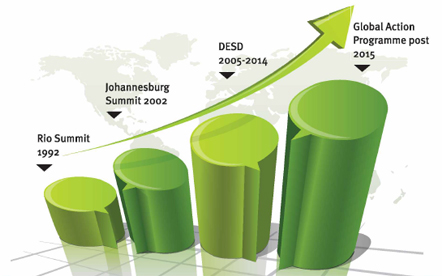
It all began with the Earth Summit in 1992, where Agenda 21 emphasized the role of education in sustainable development. The Johannesburg Summit in 2002 further re-affirmed this. However, the big boost came in December 2002, when the UN declared 2005 to 2014 to be the United Nations Decade of Education for Sustainable Development (DESD). The decade aimed to promote education as a basis for a more sustainable society by integrating sustainability into the education process at all levels, and also, into all areas of life including local communities and human society in general. While the decade was successful in many ways, much work remains to be done. The Global Action Programme (GAP) is now in place "to generate and scale up action in all levels and areas of education and learning in order to accelerate progress towards sustainable development" post 2015.
References: