
Headquarters
The Energy and Resources Institute (TERI)
Darbari Seth Block, Core 6C,
India Habitat Centre, Lodhi Road,
New Delhi - 110 003, India
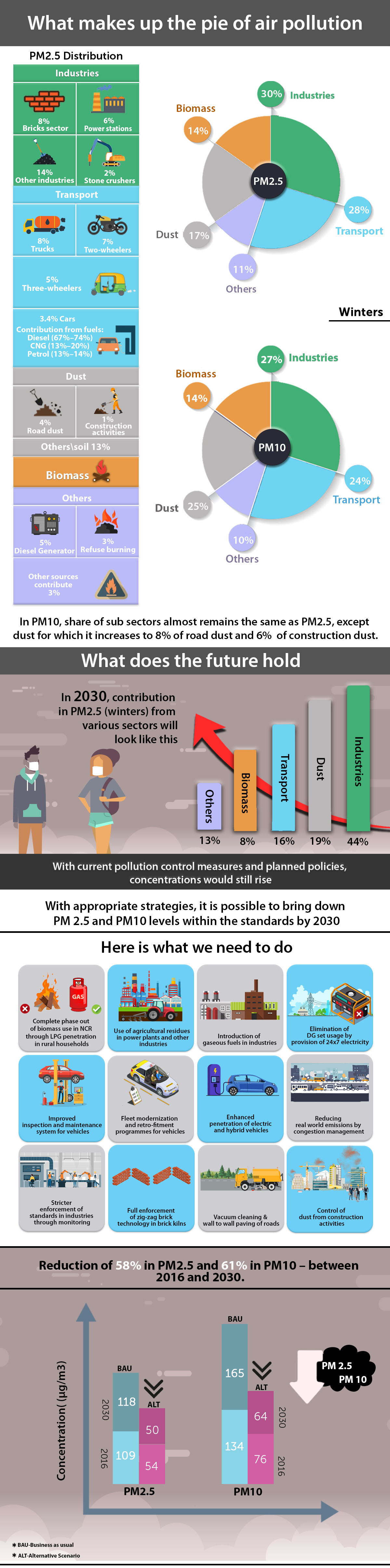
TERI and ARAI's study report of the source apportionment of PM2.5 and PM10 concentrations in Delhi NCR takes a detailed look at the sources of pollution, their sub-sectoral break up. It also projects the future sectoral emissions and air quality, and tests several interventions that can reduce pollution in the region. This will enable development and testing of appropriate strategies for control of air pollution in Delhi-NCR.
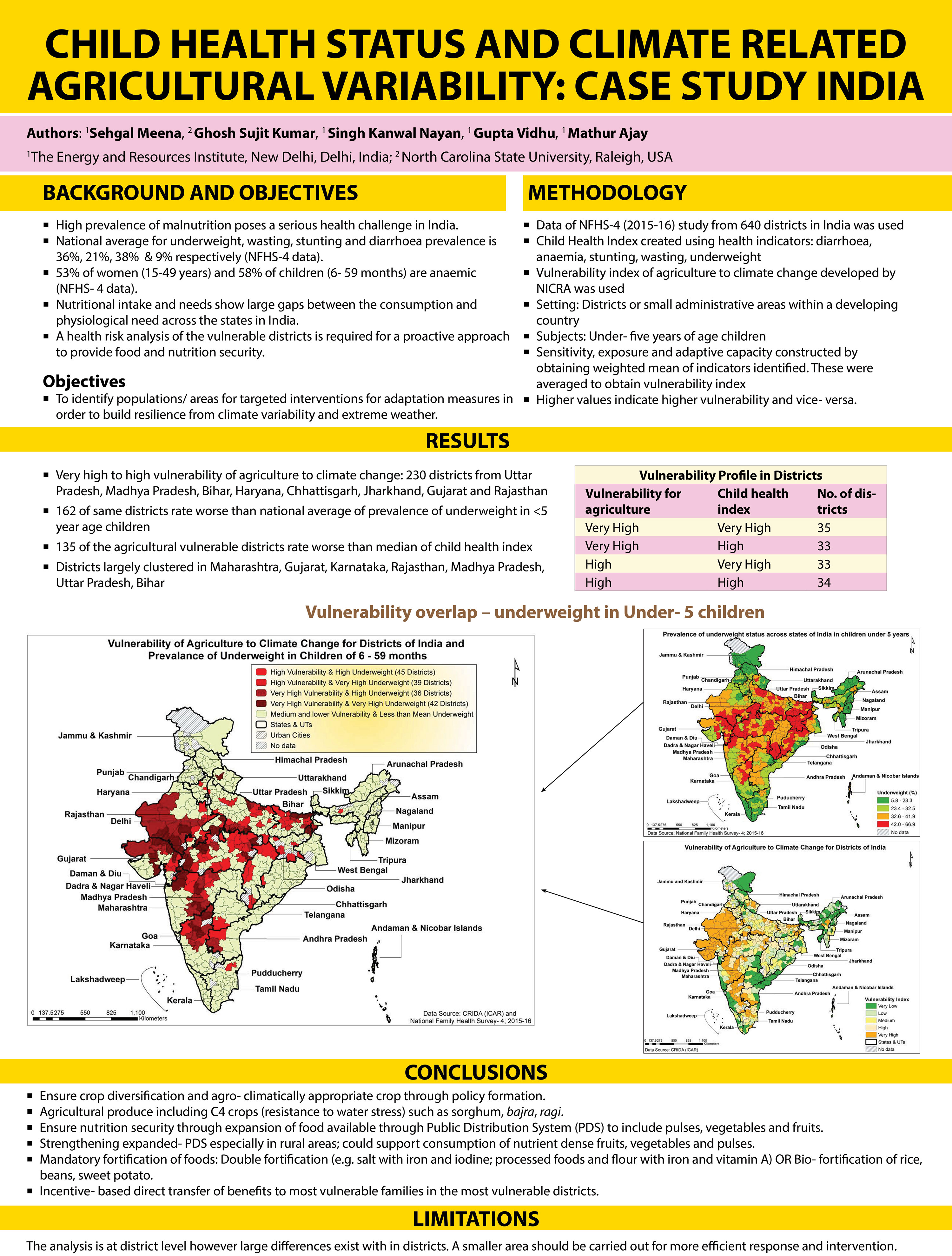
The poster was presented at 50th Annual National Conference of Nutrition Society of India (NSI), ICMR- National Institute of Nutrition (NIN), Hyderabad, India.
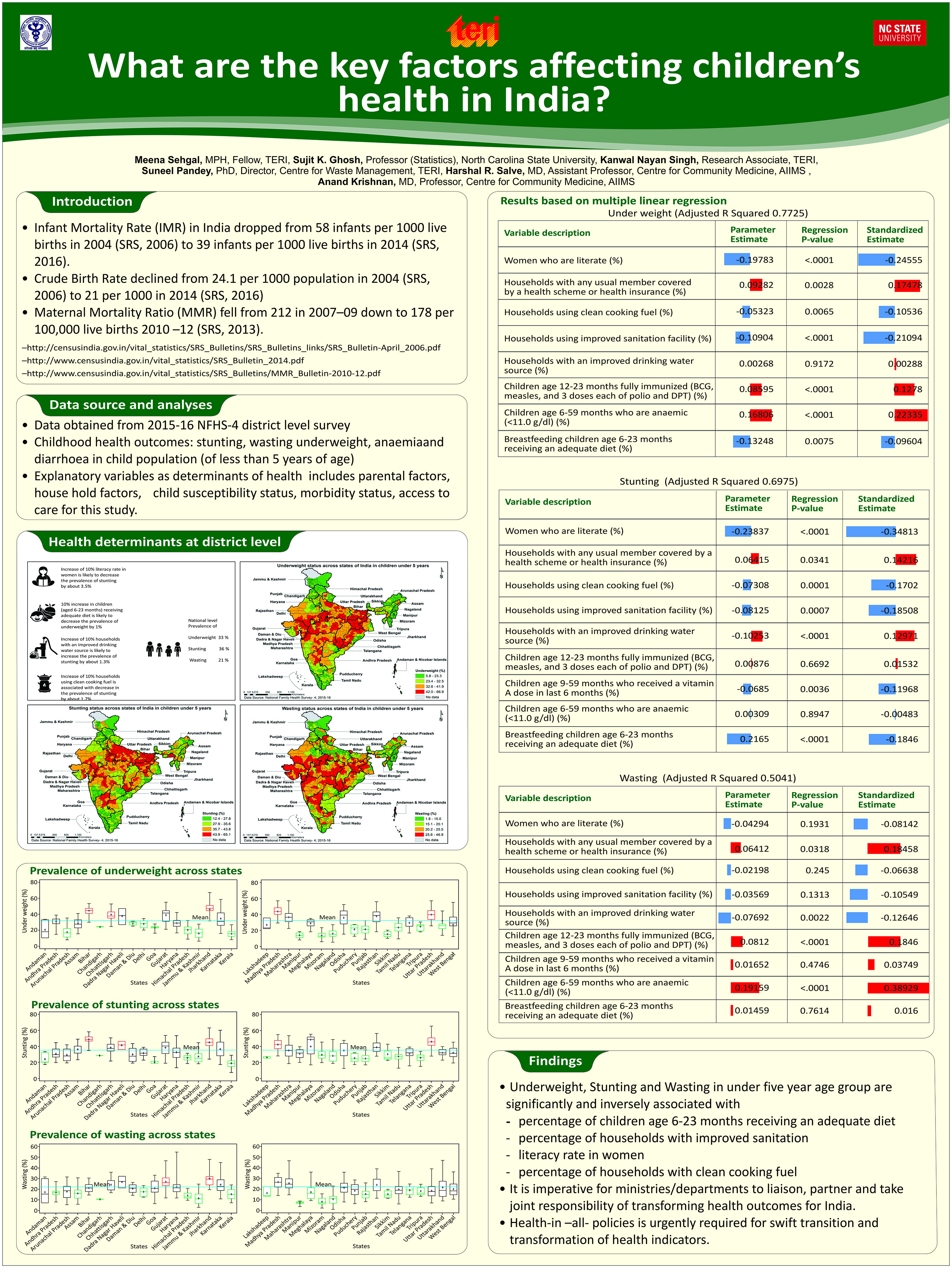
The poster was presented at Global Environmental Health Day 2017 Global Community Empowerment Through Community- Engaged Research Friday; September 15, 2017; NIEHS Building 101; Research Triangle Park; North Carolina, USA.
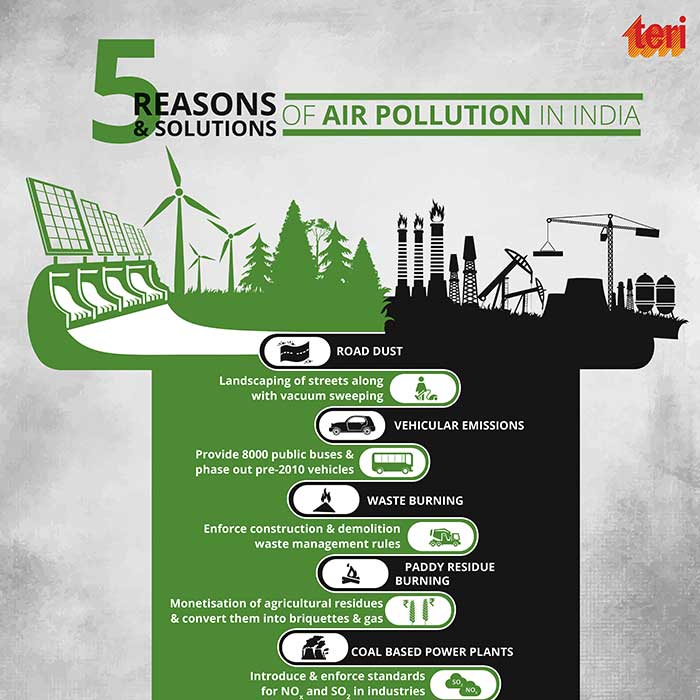
Air pollution emissions arise from many sectors, including power, transport, industry, residential, construction, and agriculture. The resulting air pollution affects health, food production, water, and regional climate. Furthermore, since air pollution from one location travels within days to areas as far away as 1,000 km, coordination across cities and states is required, in addition to multi-sectoral coordination.
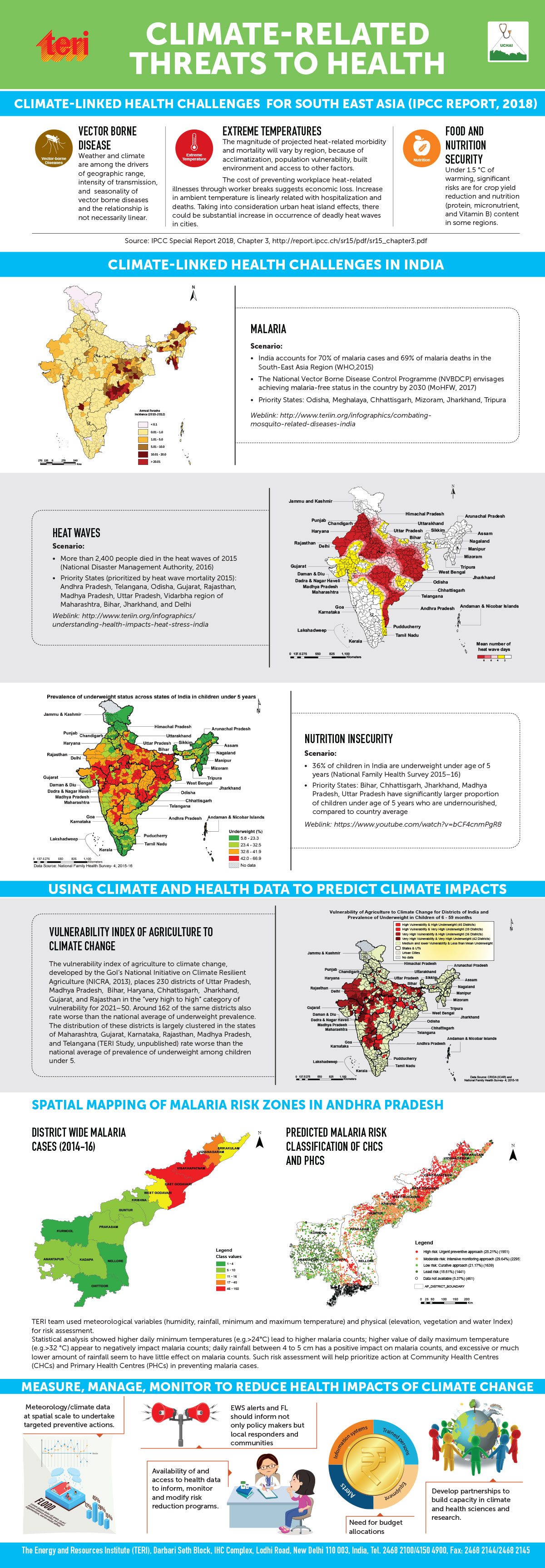
Many populations in India currently suffer from high burden of vector borne diseases, heat stress-related diseases, and malnutrition. These health problems are all sensitive to seasonal variations in temperatures and precipitation patterns. These short-term variations in temperature and precipitation as well as extreme storms have been observed to be increasing in intensity due to global climate change and thus are a challenge. The major Indian states affected by these climate- sensitive conditions (i.e.
Fun stuff to download, from TERI to you
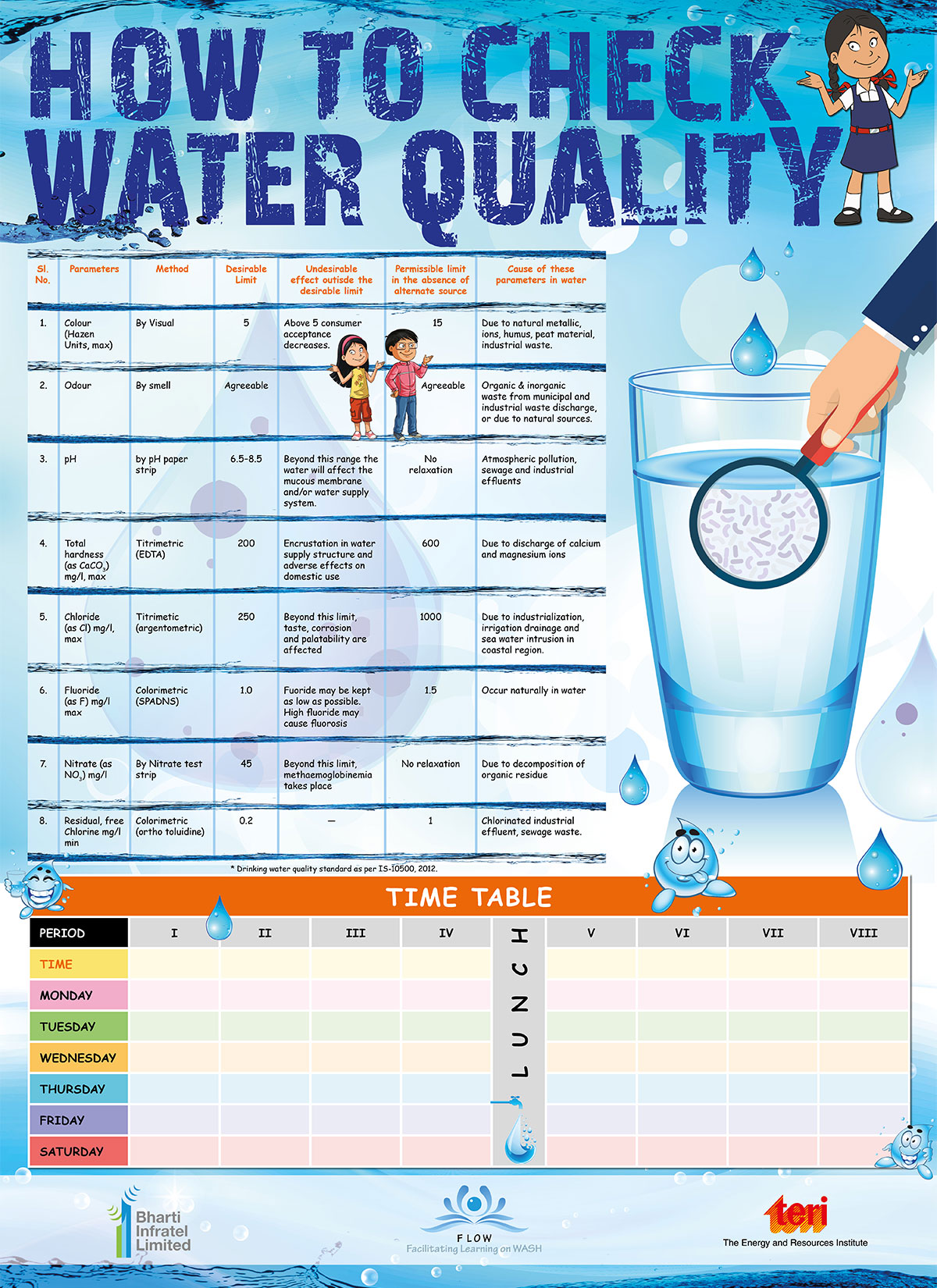
This timetable provides you a simple guide to check the quality of water you are drinking and prescribes the tests for various impurities. Click here to download
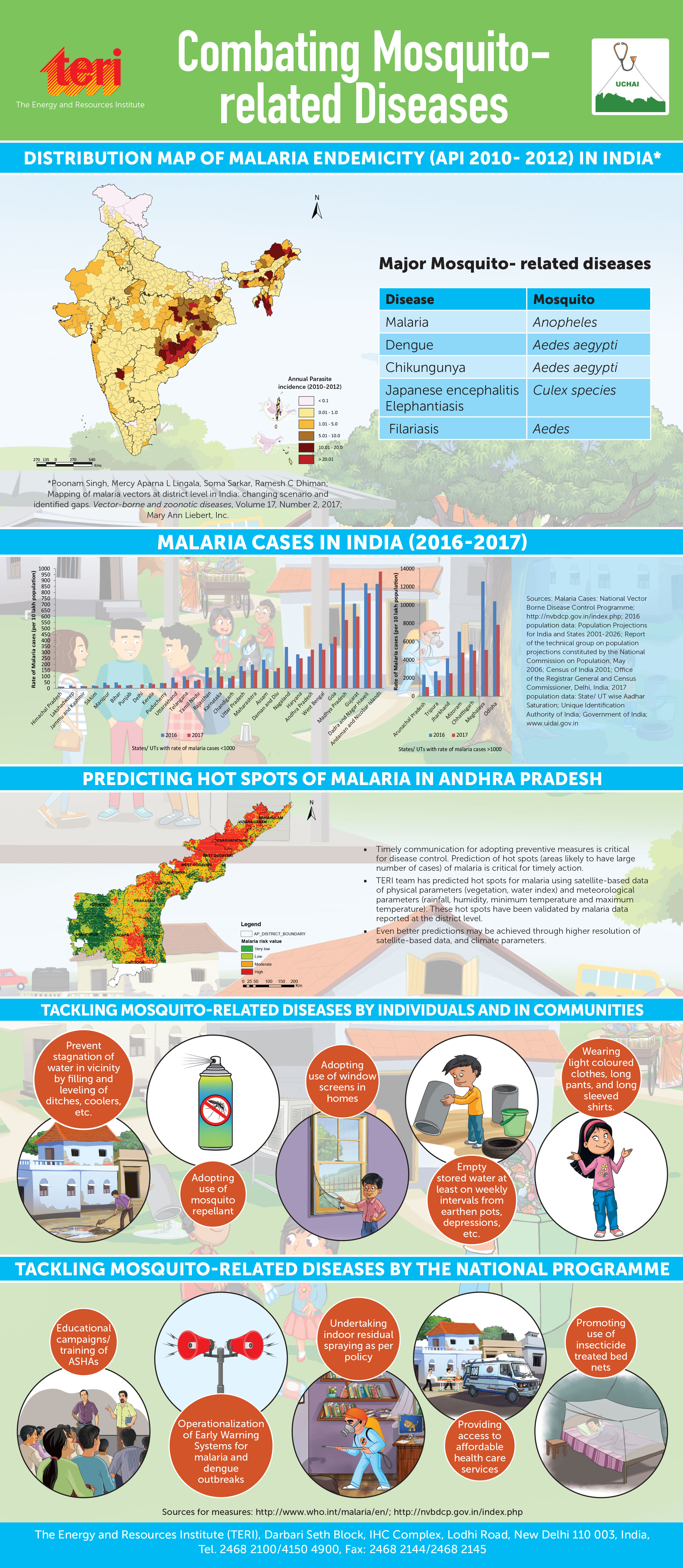
Malaria is one of the six major vector-borne diseases in India, the occurrence of which varies with changes in ecological, climatic and socio-developmental conditions(1).
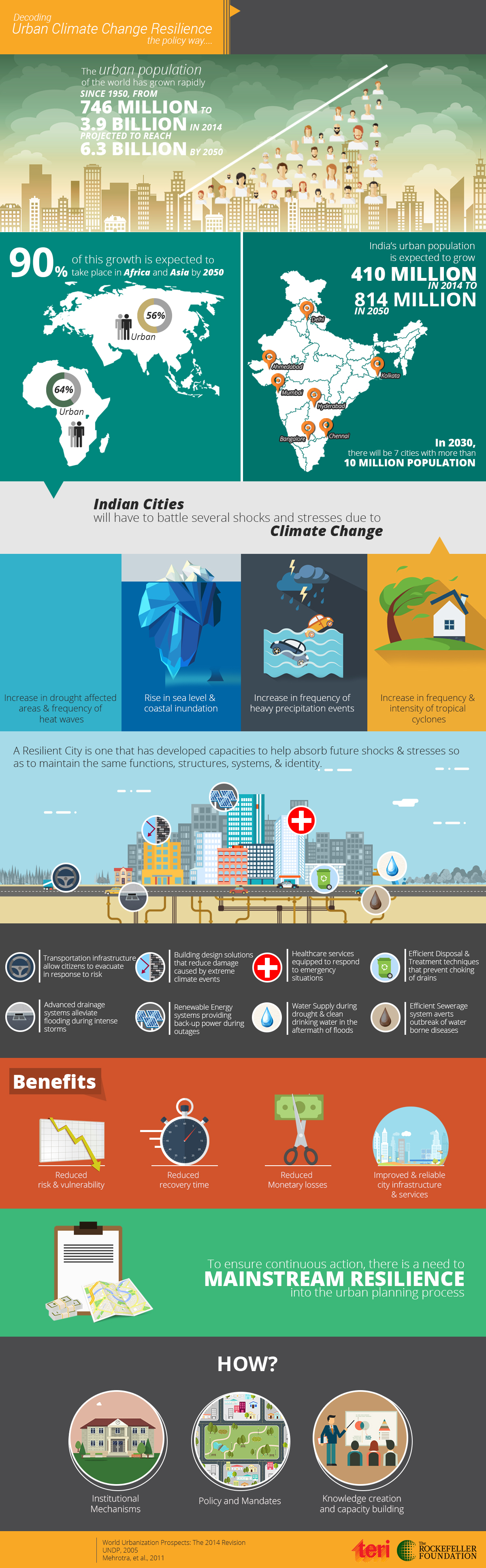
Securing our cities in the face of climate change
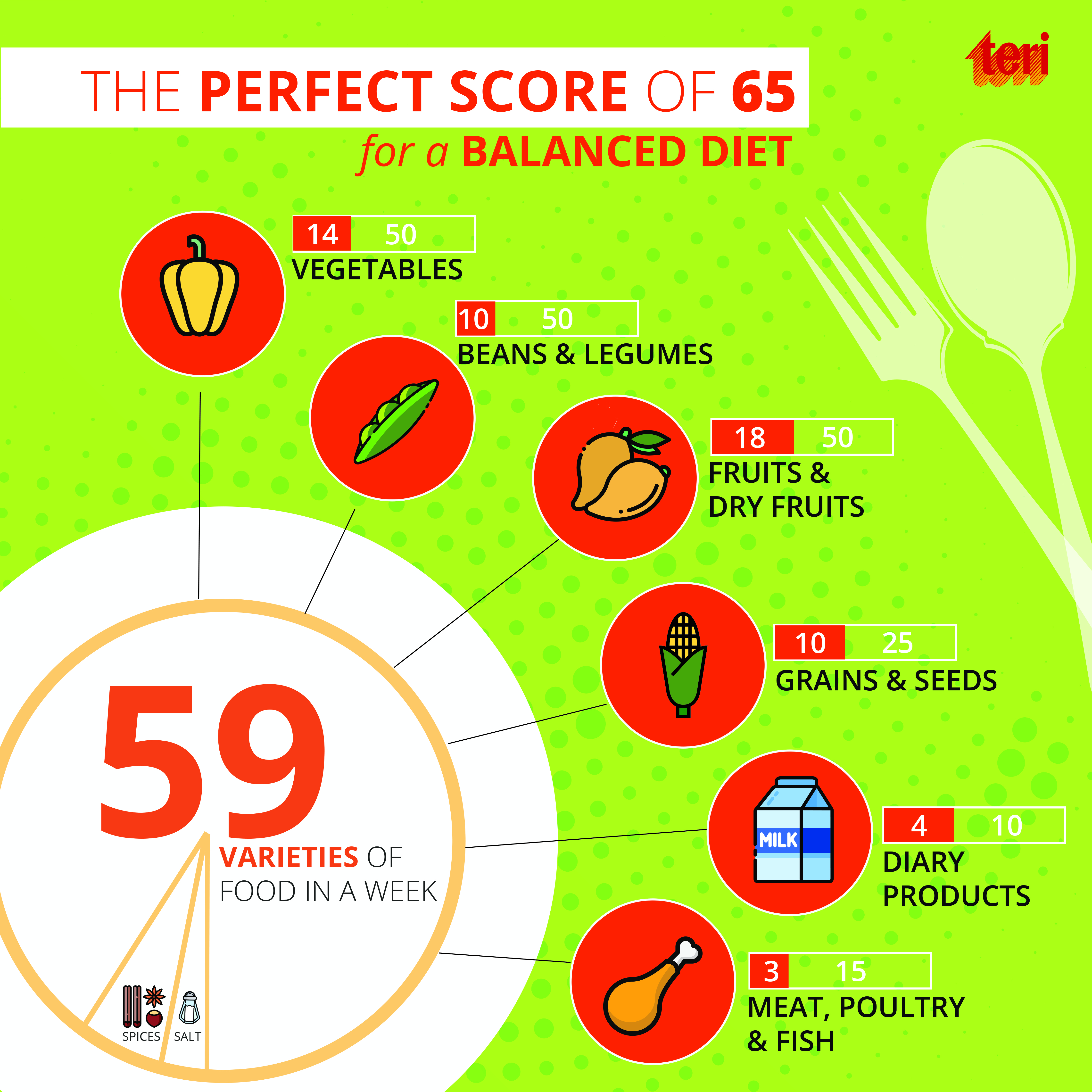
Ensuring a wide variety of food in a week's diet can be the answer to a perfect health
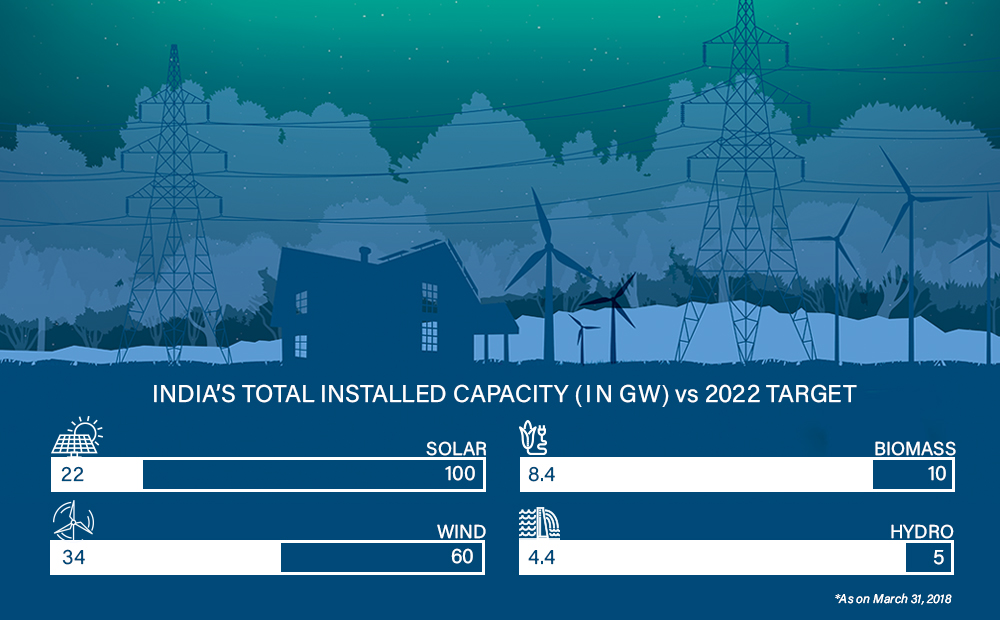
How far is India from achieving its renewable energy targets? This infographic breaks it down for you