Headquarters
The Energy and Resources Institute (TERI)
Darbari Seth Block, Core 6C,
India Habitat Centre, Lodhi Road,
New Delhi - 110 003, India
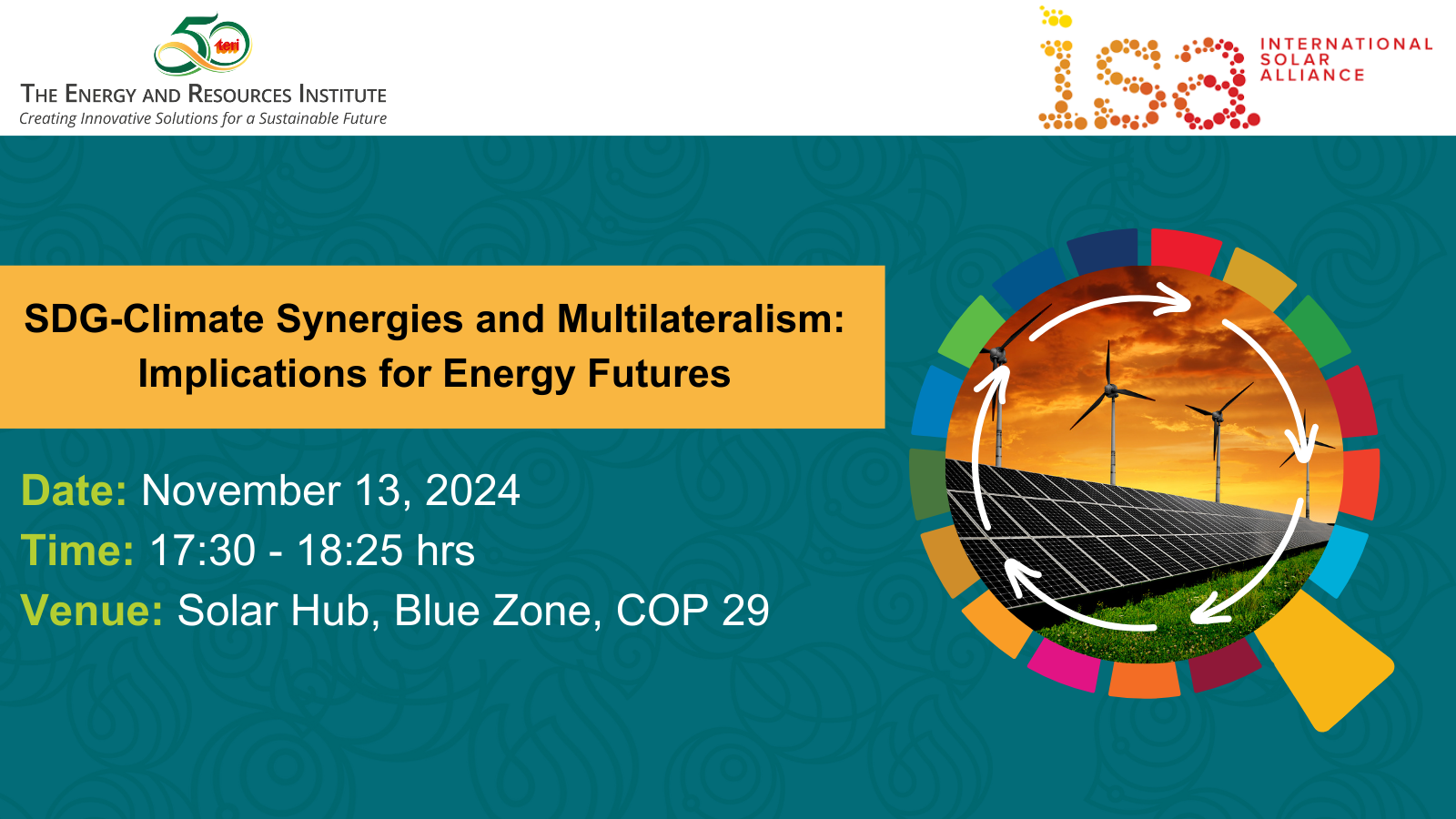
In the face of accelerating climate change and pressing global challenges, fragmented governance systems hindered the integration of the Sustainable Development Goals (SDGs) and climate action. Despite shared objectives, governance structures, including multilateral mechanisms, remained disconnected. This fragmentation persisted even after the adoption of transformative global frameworks like the Paris Agreement and the 2030 Agenda for Sustainable Development, leaving only 13.6% of SDG targets on track.
The interconnected nature of climate action and the SDGs demonstrated significant potential for enhancing global economic output and resilience. The First Global Report on Climate and SDG Synergy revealed that mainstreaming climate adaptation and focusing on co-benefits could help achieve nearly 70% of the SDG targets by 2030. However, governance silos often obstructed progress, necessitating adaptive, inclusive, and cross-sectoral approaches.
The session explored practical approaches to integrating governance frameworks for sustainable development and climate action. Discussions centered on examples of multilateral processes, responses to climate-related water emergencies, and financing solutions requiring adaptive and effective governance at all levels.
The session underscored that multilateralism, inclusive policies, and innovative financing are critical to achieving energy sustainability and climate resilience while ensuring no one is left behind.