









Headquarters
The Energy and Resources Institute (TERI)
Darbari Seth Block, Core 6C,
India Habitat Centre, Lodhi Road,
New Delhi - 110 003, India
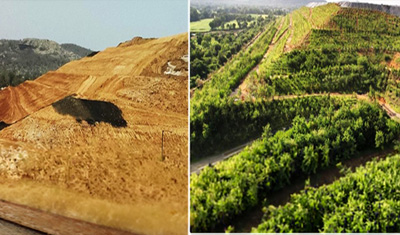
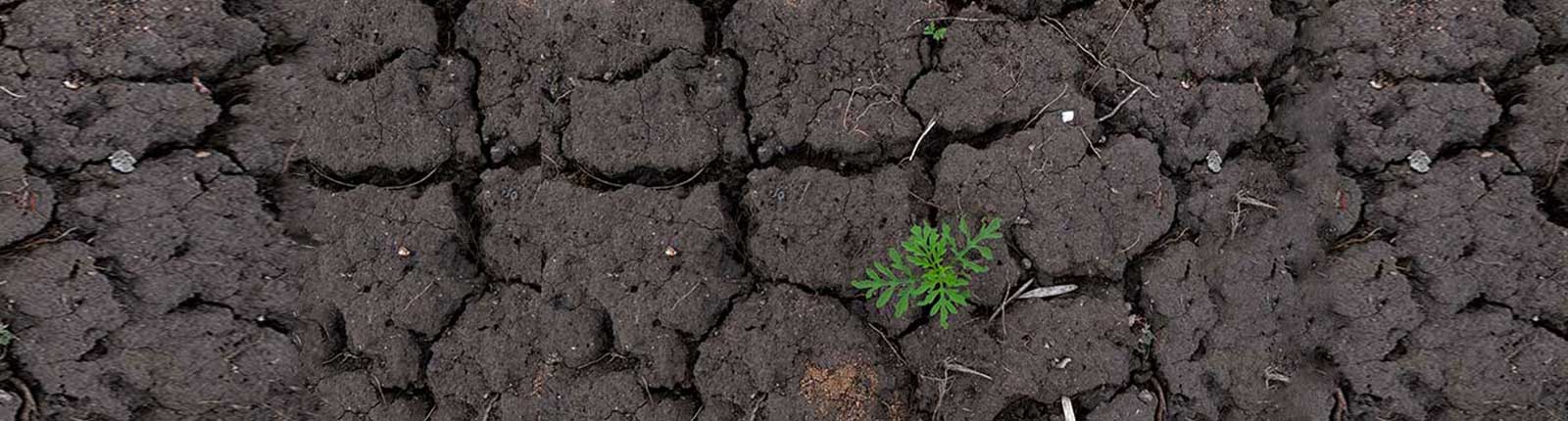
Today, about 30% of the Earth's land is estimated to be already degraded due to unsustainable use. This further leads to the risk of millions of people being displaced by desertification over the coming decades. We focus on policy and technology solutions that prevent land degradation, restore and further enrich the quality of land, thereby improving livelihoods of people.


India must stop treating mangrove restoration as a plantation exercise and begin financing it as climate-resilient coastal infrastructure.
Achieving India's land restoration commitments will depend on mobilising public and private finance in ways that strengthen rural livelihoods while rebuilding ecological resilience.
As climate finance gains momentum globally, India must broaden its vision beyond forests and recognise the immense value of rangelands, soils, and pastoral livelihoods in addressing climate change.
As the world marks the International Day for Biological Diversity, it is worth asking a simple but uncomfortable question: can biodiversity conservation succeed on moral appeal alone?
India’s forests are entering a decade of compounded risk. Longer dry spells, erratic rainfall, severe fire seasons, invasive spread, fragmentation and rising biomass pressure are no longer episodic concerns; they are structural realities.
The Union Budget 2026 for agriculture marks a decisive recalibration of India’s farm policy, signalling a gradual transition from a subsidy-reliant, relief-driven approach to a more technology-enabled, outcome-oriented, and sustainability-focused growth paradigm.
Agroforestry represents one of India’s most compelling opportunities to align climate mitigation with rural income generation. Trees on farms deliver tangible ecological and agronomic co-benefits—such as timber, fruit, fodder, shade, and improved soil and water retention—while sequestering carbon.
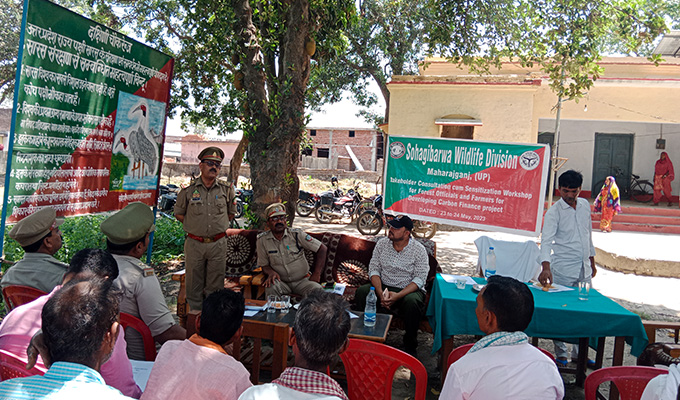
TERI, the Kisan Chamber of Commerce (KCC), and Value Network Advisory (VNV) formally signed a tripartite Memorandum of Understanding (MoU) at the Constitution Club of India, New Delhi, on July 9, to collaborate on the development and implementation of a carbon project in Haryana.
TERI, the Kisan Chamber of Commerce (KCC), and Value Network Advisory (VNV) formally signed a tripartite Memorandum of Understanding (MoU) at the Constitution Club of India, New Delhi, on July 9, to collaborate on the development and implementation of a carbon project in Haryana.
The third-year Annual Stakeholder Workshop on Process Monitoring under the Rejuvenating Watershed for Agricultural Resilience through Innovative Development (REWARD) programme was successfully conducted by The Energy and Resources Institute, supported by the Watershed Development Department (WDD), Government of Karnataka.
India’s urban financing should recognise wetlands, lakes, floodplains and green spaces as core infrastructure, integrating nature-based solutions with engineered systems to strengthen climate resilience and reduce urban risks, writes Mr Sayanta Ghosh, Senior Associate Fellow, Land Resources Division, The Energy and Resources Division, TERI.
South Asia can move beyond simply generating carbon credits and build a wider ecosystem around MRV, geospatial monitoring, verification, carbon accounting, finance and digital infrastructure, writes Mr Sayanta Ghosh, Senior Associate Fellow, Land Resources Division, The Energy and Resources Institute (TERI).
BRICS should promote digital agriculture as a shared public good through interoperable data systems, AI, satellite intelligence and farmer-centric technologies to strengthen food security and climate resilience, writes Mr Sayanta Ghosh, Senior Associate Fellow, Land Resources Division, The Energy and Resources Institute (TERI).
Carbon markets alone cannot bridge India’s nature-finance gap; a diversified nature-finance framework combining public and private finance, biodiversity credits, ecosystem payments and blended capital is needed, writes Mr Sayanta Ghosh, Senior Associate Fellow, Land Resources Division, The Energy and Resources Institute (TERI), New Delhi.
India and other biodiversity-rich countries in the Global South should move from biodiversity-finance discussions towards functioning biodiversity credit markets, with a focus on domestic demand, credible methodologies, investable restoration projects and safeguards, writes Mr Sayanta Ghosh, Senior Associate Fellow, Land Resources Division, The Energy and Resources Institute (TERI), New Delhi.
India should retain a clear distinction between the compliance and offset segments of its emerging carbon market, to drive industrial decarbonisation while directing credible carbon finance to agriculture, forestry and ecosystem restoration, writes Mr Sayanta Ghosh, Senior Associate Fellow, Land Resources Division, The Energy and Resources Institute (TERI).
This brief summarizes the findings of the Responsible Agri-PV Baseline Assessment conducted by The Energy and Resources Institute (TERI) under the Responsible Energy Initiative (REI) India. The study examines an institutional agrivoltaics (Agri-PV) pilot implemented by Renkube Pvt. Ltd. in collaboration with Professor Jayashankar Telangana State Agricultural University (PJTSAU).
The primary focus of this assessment is to evaluate the feasibility of co-locating solar power generation with active agriculture in the semi-arid, water-stressed conditions typical of Telangana.
This report, prepared by TERI under the Responsible Energy Initiative (REI) India, assesses a farmer-led agrivoltaics (Agri‑PV) pilot at the Khare Energy Plant in Tikamgarh district, Madhya Pradesh. The study evaluates the project’s energy performance, agricultural outcomes, water use, financial viability, and socio-economic impacts, with the aim of understanding how Agri‑PV can support people‑centric and climate‑resilient renewable energy development in India.
India's forestry NDC target is ambitious and therefore requires a well framed-strategy and a holistic approach to be accomplished. This policy brief presents an analysis of the impending challenges and summarizes the possible recommendations and a road map for meeting the NDC goals by 2030.
India's forestry funds require a considerable increase in their allocation, along with other immediate reform in the forestry sector, to achieve the nation's forestry Nationally Determined Contributions (NDCs) target. This policy brief underlines the challenges in achieving the ambitious target of forestry NDCs while laying down recommendations and a roadmap focusing on the need for innovative financial mechanisms.
The key role of blue carbon in mitigating climate change through coastal ecosystem habitats remains unrecognized and unutilized. This policy brief aims to assess this carbon sequestration and mitigation potential of coastal ecosystems for India to achieve its forestry NDC target.
Agroforestry systems in India have the potential of achieving two-thirds of the forestry sector's NDC targets. This policy brief aims at analysing the status, potential and needs of agroforestry in India and the benefits of providing MSP to farmers for the timber they produce.