Headquarters
The Energy and Resources Institute (TERI)
Darbari Seth Block, Core 6C,
India Habitat Centre, Lodhi Road,
New Delhi - 110 003, India
DISCOM-led regional platform proposed to accelerate clean energy transition and strengthen grid resilience
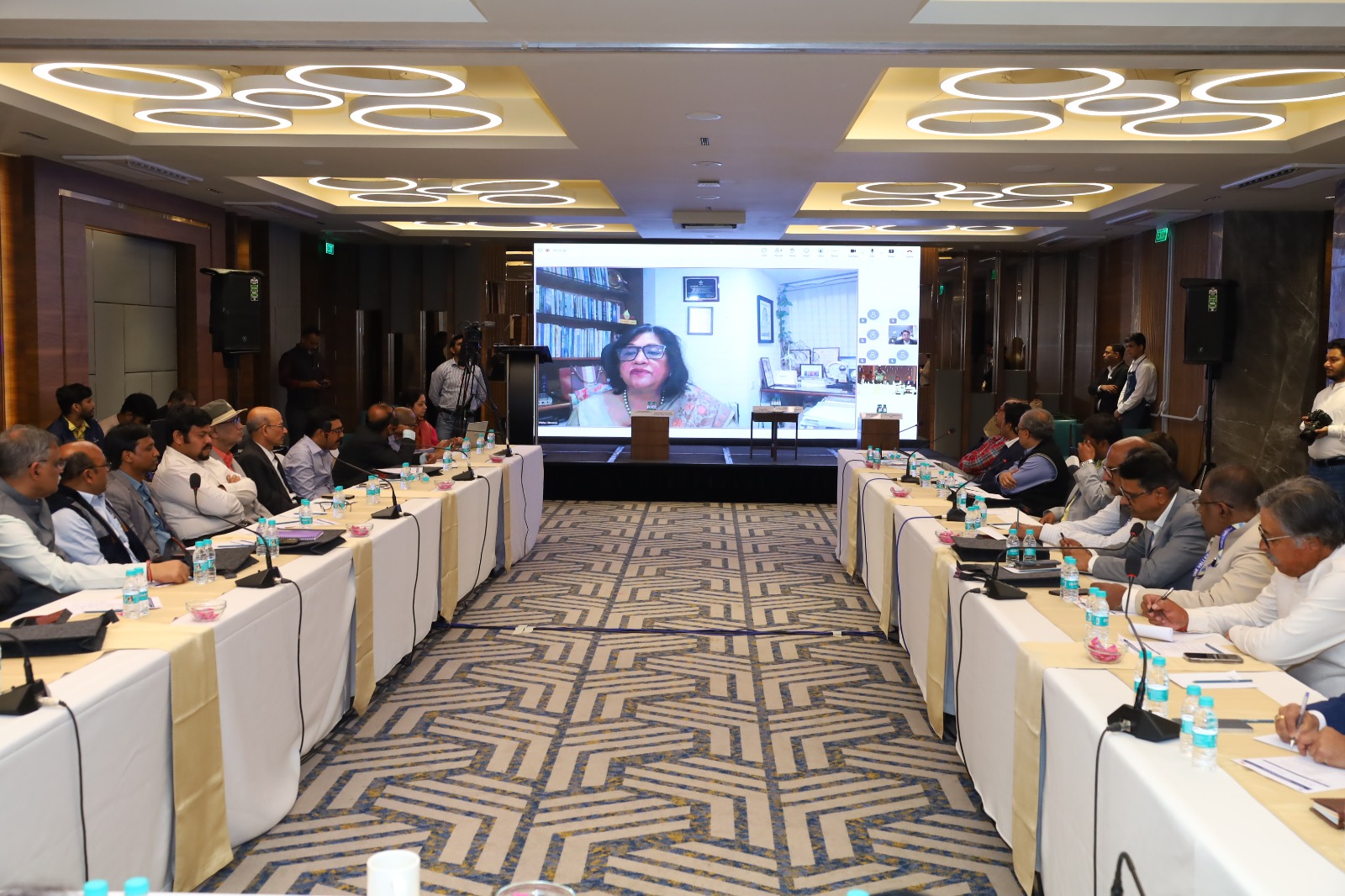
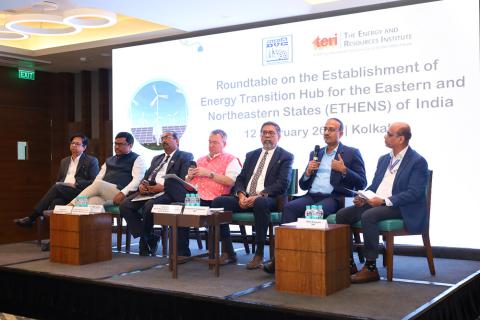
Kolkata | 12 February 2026: The Energy and Resources Institute (TERI) today convened senior policymakers, distribution companies (DISCOMs), regulators and energy leaders in Kolkata to deliberate on the establishment of the Energy Transition Hub for the Eastern and Northeastern States (ETHENS) of India. Supported by the Damodar Valley Corporation (DVC), the proposed Hub is envisaged as a DISCOM-driven, demand-led regional platform to accelerate a balanced, resilient and region-specific energy transition.
The high-level roundtable focused on designing ETHENS as a permanent institutional mechanism that can help utilities in the Eastern and North-Eastern states translate national clean energy ambitions into implementable, utility-centric actions.
India’s power sector is entering a decisive decade of transformation, guided by the targets of achieving 500 GW of non-fossil fuel capacity by 2030 and net-zero emissions by 2070. While the Eastern and North-Eastern region remains central to India’s industrial base and natural resources, it continues to face distinct challenges in renewable integration, grid readiness, storage deployment, financial sustainability, and terrain-sensitive electrification.
Delivering the Welcome Address, Dr Vibha Dhawan, Director General, TERI, highlighted the need for regional institutional innovation. “As implementation accelerates, it is essential to recognize that India’s transition must be inclusive and regionally equitable. A single national template cannot address the full diversity of local constraints. This is particularly evident in Eastern and Northeastern parts of India, where the transition challenge is distinct and warrants dedicated attention,” Dr Dhawan said.
In his Opening Remarks, Mr Dipak Dasgupta, Distinguished Fellow, TERI, emphasized that the transition extends beyond renewable capacity addition. “There are massive opportunities in the renewable energy sector across the Eastern and Northeastern states of India, supported by substantial financing mechanisms,” Mr Dasgupta noted. Offering Special Remarks, Mr S Suresh Kumar (IAS), Chairman, Damodar Valley Corporation, highlighted the region’s pivotal role. “Focused and targeted policy support for the Eastern and Northeastern states is vital for enabling a fair, inclusive, and sustainable clean‑energy transition,” he said.
In his Special Address, Mr Krushna Chandra Panigrahy, Director General, Bureau of Energy Efficiency (BEE), stressed the importance of system optimization. “While energy efficiency penetration remains disproportionately low across the region, this gap is in fact our greatest opportunity—an open canvas to drive innovation, reduce energy intensity, and unlock some of the most cost effective gains in India’s clean energy transition.” he averred.
Delivering the first Keynote Address, Mr Arup Sarkar, Member Finance, DVC, pointed to the financial dimension of the transition. “ETHENS hold potential to turn every geographical and logistical regional challenge into an opportunity for innovation proving that even the toughest terrains can lead India’s most inclusive and sustainable clean energy transformation,” he remarked. Mr Swapnendu Kumar Panda, Member Technical, DVC added, “Today’s deliberations reaffirm that India’s clean energy future must be inclusive, regionally balanced, and grounded in local realities. As the nation accelerates its transition, dedicated attention to these regions is not just necessary, it is integral to ensuring that India’s energy transformation is just, equitable, and truly national in spirit.”
The second Keynote Address was delivered by H.E. Dr Andrew Fleming, British Deputy High Commissioner to East & Northeast India, who highlighted the value of collaboration. “Under the UK-India Vision 2035, our partnership is deepening through knowledge exchange collaboration including our upcoming UK–West Bengal roundtable discussion on energy storage which reflects our shared commitment to accelerating clean, resilient power systems. The UK’s innovation ecosystem such as the Catapults offers models of best practice that can help the proposed Energy Transition Hub in the East and North East to address the region’s unique challenges and unlock its immense opportunities,” he noted.
Concluding the inaugural session, Mr Sivakumar V Vepakomma, Director – Power Systems, Solar Energy Corporation of India Limited (SECI), underscored the importance of grid preparedness. “The Eastern and Northeastern states are ideally positioned to host hubs like ETHENS—provided we move step by step, strengthen capacity, and channel the right resources to turn promising ideas into implementable, on‑ground solutions” he shared.
Setting the context for the discussions, Mr Ashish K Sharma, Associate Fellow, TERI, presented the proposed institutional structure of ETHENS as a DISCOM-anchored platform supported by DVC and led by TERI as Knowledge Partner.
Stakeholder deliberations, moderated by Mr Alekhya Datta, Director, TERI, and Mr NS Mondal, Former Member Secretary, Eastern Regional Power Committee, focused on shared regional constraints — including aging thermal assets, storage obligations, grid strengthening, hard-to-reach terrain in the North-East, workforce transition pressures, and institutional capacity gaps.
Participants emphasized that ETHENS must remain DISCOM-centric, with governance mechanisms that allow utilities to directly shape research priorities, pilot projects, and work programmes.
Sharing initial reflections, Mr Debashis Sen (Retd. IAS), Former Chairman & Managing Director, West Bengal Housing Infrastructure Development Corporation, noted, “ETHENS is both timely and necessary because Eastern and Northeastern India face structural constraints terrain, grid limitations, higher delivery costs, and a legacy dependence on coal—that require solutions designed for local realities, not a generic template.”
The roundtable concluded with broad consensus on initiating immediate evidence-based studies and pilot interventions in areas such as storage integration, automation, forecasting tools, decentralized systems and capacity building.
Delivering the Vote of Thanks, Dr P K Bhattacharya, Director, TERI, stated, “ETHENS stands as a timely, region specific platform shaped by TERI with the support of DVC, recognizing that Eastern and Northeastern India cannot be served by a one size fits all energy strategy. By addressing the region’s unique constraints – lower renewable penetration, higher coal dependence, challenging terrain, weaker grids, and limited access to pilots and capacity building, ETHENS aims to accelerate a clean energy transition that is just, inclusive, and resilient.”
The deliberations will inform the formalization of ETHENS’ governance structure and first-year operational roadmap, with participating DISCOMs expected to play a key role in shaping its priorities.