Headquarters
The Energy and Resources Institute (TERI)
Darbari Seth Block, Core 6C,
India Habitat Centre, Lodhi Road,
New Delhi - 110 003, India
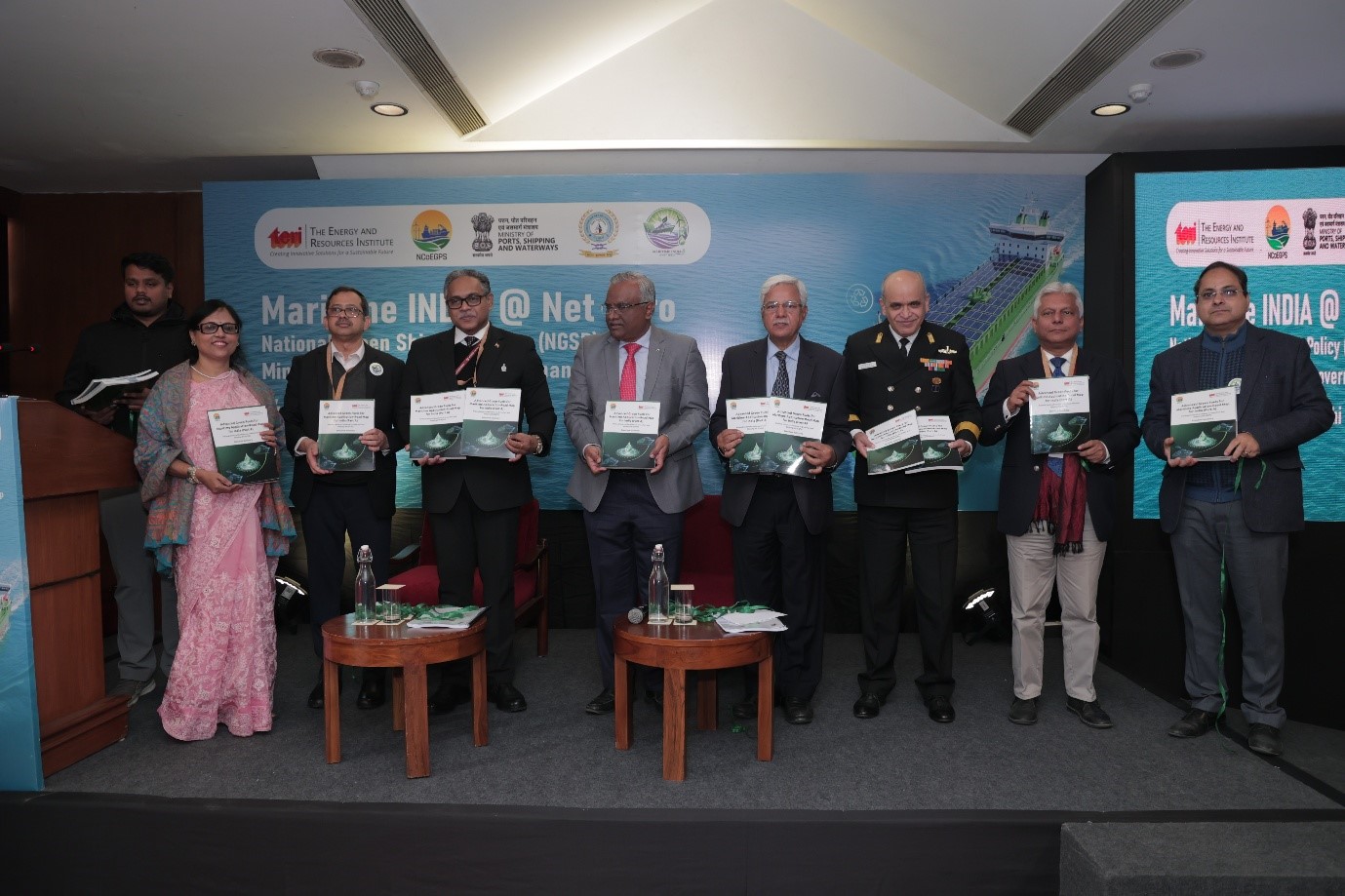
As part of the two-day national workshop “Maritime India @ Net Zero: Pathways for Decarbonising Shipping, Ports and Inland Waterways”, organised by The Energy and Resources Institute (TERI) in collaboration with the Directorate General of Shipping (DG Shipping), a knowledge product titled “Advanced Green Fuels for Maritime Application – Road Map for India (Part A)” was released under the National Centre of Excellence in Green Port and Shipping (NCoEGPS).
The report provides a strategic and evidence-based roadmap for aligning India’s maritime sector with the International Maritime Organization’s (IMO) Net Zero Framework and forthcoming Greenhouse Gas Fuel Intensity (GFI) regulations. It evaluates alternative and zero/near-zero (ZNZ) fuels using a comprehensive sustainability framework covering lifecycle emissions, fuel supply readiness, storage and bunkering infrastructure, engine and fuel-cell compatibility, cost implications, and regulatory preparedness.
Based on extensive vessel data analysis and global benchmarks, the study identifies blended fuels—particularly biodiesel and alcohol-based blends—as the most practical and cost-effective short- to medium-term decarbonisation pathway up to 2035, enabling compliance through existing engines. For the long term, the roadmap recommends a phased transition towards dual-fuel engines, fuel-cell technologies, and onboard carbon capture solutions, with differentiated pathways for inland waterways, coastal shipping, and deep-sea vessels.
The report also highlights critical policy, standards, and infrastructure gaps, underscoring the need for domestic fuel production, national standards development, and targeted bunkering infrastructure to support India’s maritime energy transition. Part B of the report is under process, which underlines the implementation part with timelines for the roadmap.